BAREFOOT ARTISTS 2025 YEAR IN REVIEW
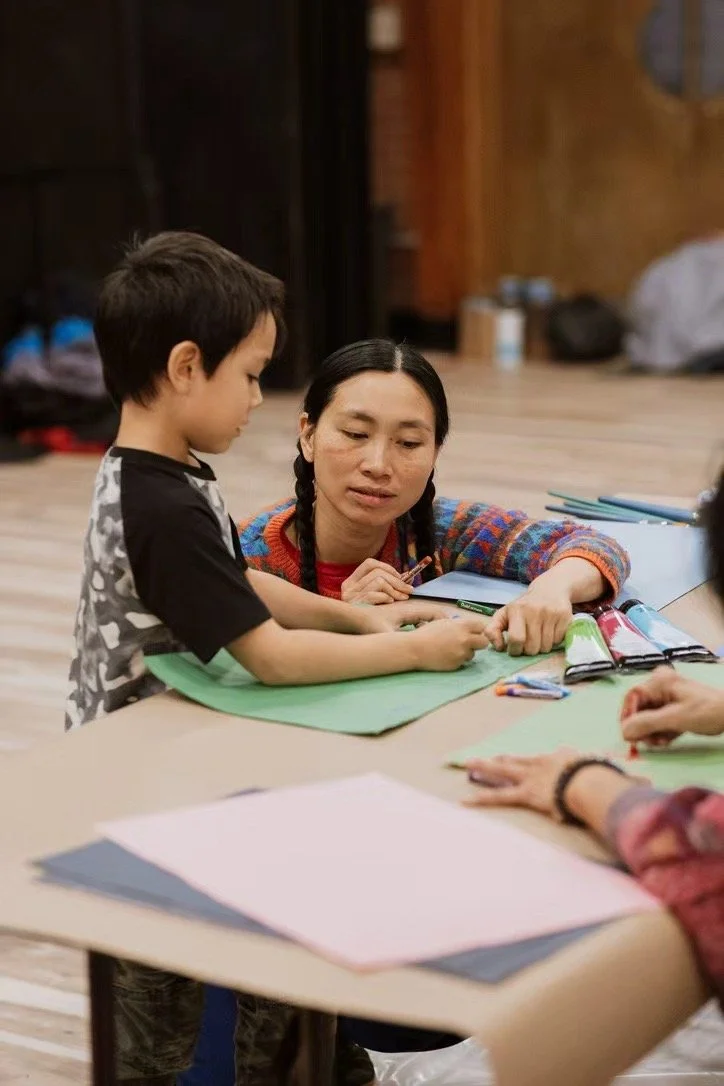
Lily with mother and son volunteers.
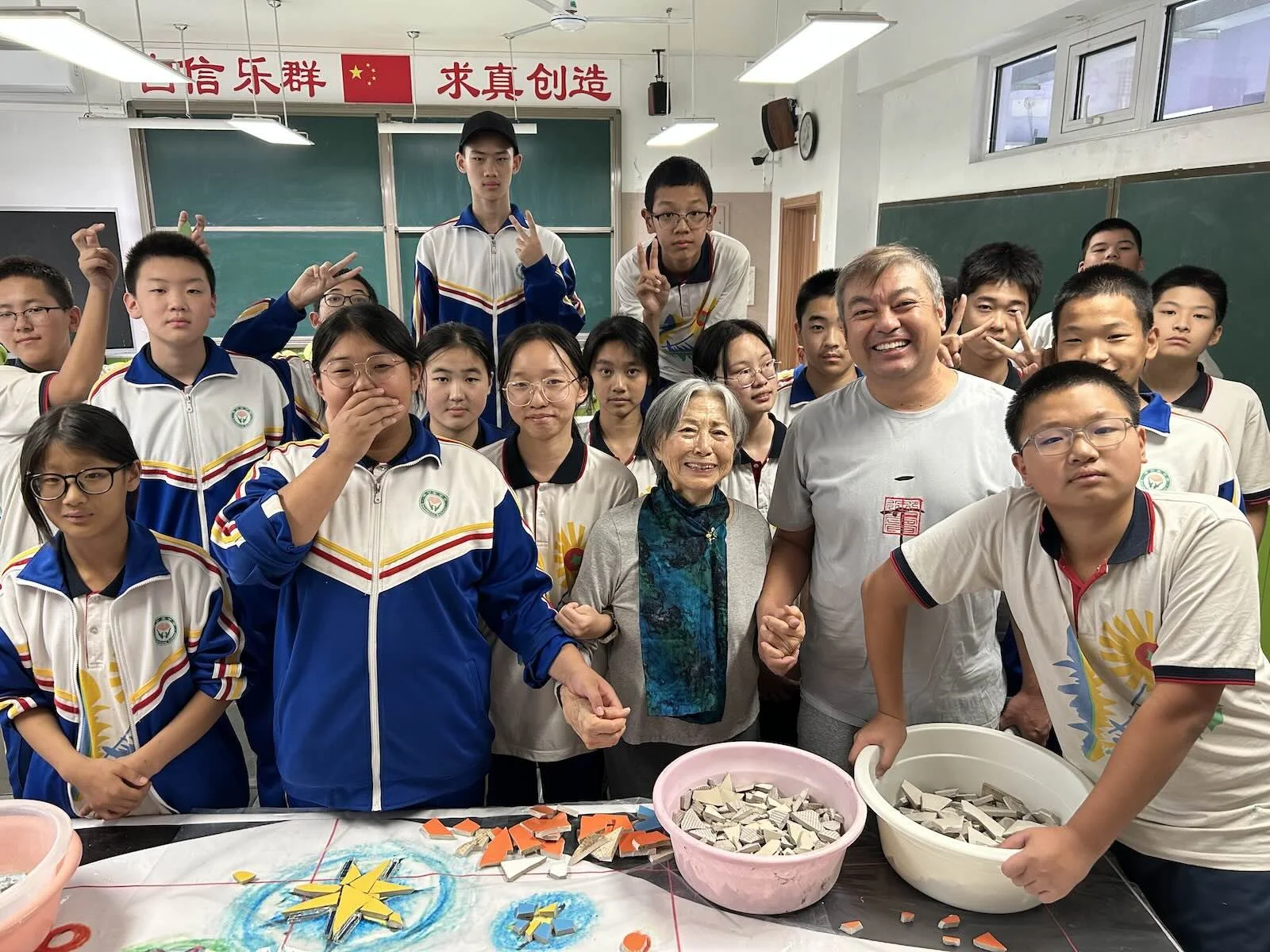
Lily with Dandelion students & teachers.
2025 has been a year of milestones for Barefoot Artists. We celebrated the 20-year anniversary of our relationship with Dandelion School for migrant children in Beijing with phase II of our mosaic mural project, and the school itself turned 20! This year also marked 21 years of my work with Rwandan communities, including the Rugerero genocide survivors and the Indigenous Twa villages living under the crushing burden of poverty and neglect.
As we celebrated these long relationships, we also grieved the brutal, ongoing genocide in Palestine, and we continue to seek ways for Barefoot Artists to continue its previous work and remain present there.
Dark and broken spaces remained central to my work this year through my engagement with Harvard Divinity School, where I was invited by Terry Tempest Williams to join her Grief Project. Our decades-long friendship and collaboration deepened through this work, which uses art as a way to witness and hold personal and collective grief.
Alongside our long-standing work with Dandelion School and the Twa communities, new projects emerged. In June, I spent two weeks in Asheville, North Carolina working with community residents in the aftermath of a historic flood. We also began a new partnership with Alfajiri Street Kids in Nairobi. I led remote workshops for young artists, guiding them to work together to improve their street and home environments, and Barefoot Artists’ support for art supplies helped ensure the project’s success.
We continue this work not to repair what is broken, but to enter it together, with care and imagination. In shared making, something quiet and healing becomes possible. I want to extend my heartfelt gratitude to all who make this work possible: our funders, volunteers, and team, whose trust, generosity, and dedication continue to guide us forward.
May this holiday season bring you peace, joy, and renewal.
With gratitude,
Lily
Dandelion School (Beijing)
Mural of Mythic Figures
TWA (Rwanda)
Education & Farming
Alexie’s Story
20 Years in the Making
Alfajari Street Kids (Nairobi)
SUPPORT OUR WORK
Your support is critical to Barefoot Artist’s ability to continue its work in communities around the world.
Lily Yeh established Barefoot Artists as a nimble and deliberately small nonprofit organization without the encumbrances of full time staff, office space etc. However, this is not a model that is often recognized or supported by large philanthropies. We rely on the contributions of indviduals like you!
A SPECIAL OFFER
Fu Sang Tree of Life Silk Scarf
Donors who contribute $250 or more will receive a silk scarf inspired by Lily’s design for the Fu Sang Tree of Life mural at Dandelion.
To claim your scarf, simply contribute $250 or more to Barefoot Artists’ year-end campaign. You will then be contacted and asked for your shipping address.
*Please note this offer is limited to the first 20 contributors owing to the limited supply of scarves.
Fu Sang (扶桑) is an ancient mythic Tree of Life in Chinese cosmology, said to grow in the far eastern seas. In its immense, enduring branches once rested ten suns. In this mural, inspired by Han Dynasty tomb paintings, the golden sun with its three-footed crow resides atop the tree. For me, Fu Sang speaks of endurance and renewal, and carries our wish that the humble, resilient lives of the students at the Dandelion School for migrant children will grow, radiate light, and flourish wherever they land.
DANDELION
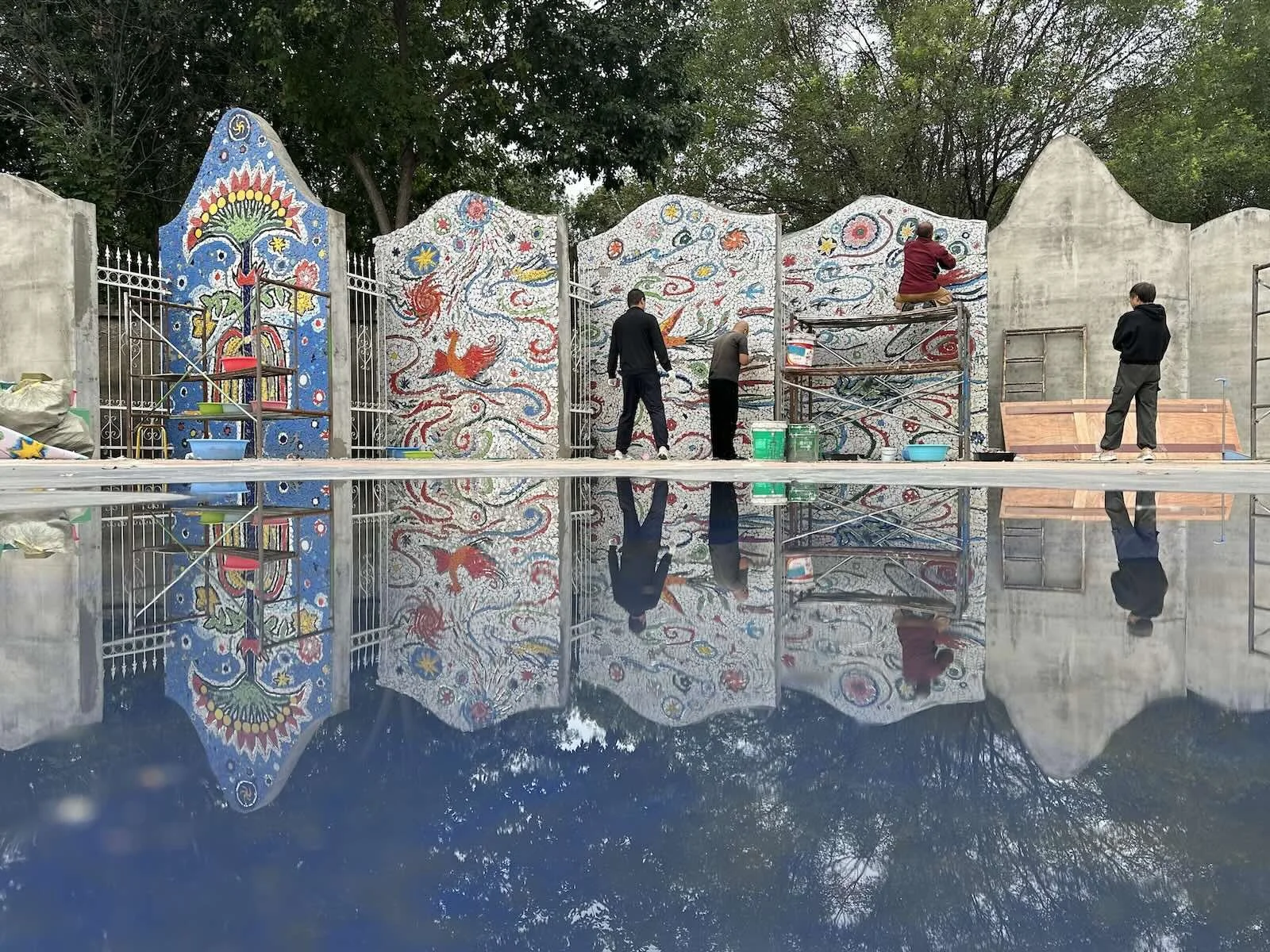
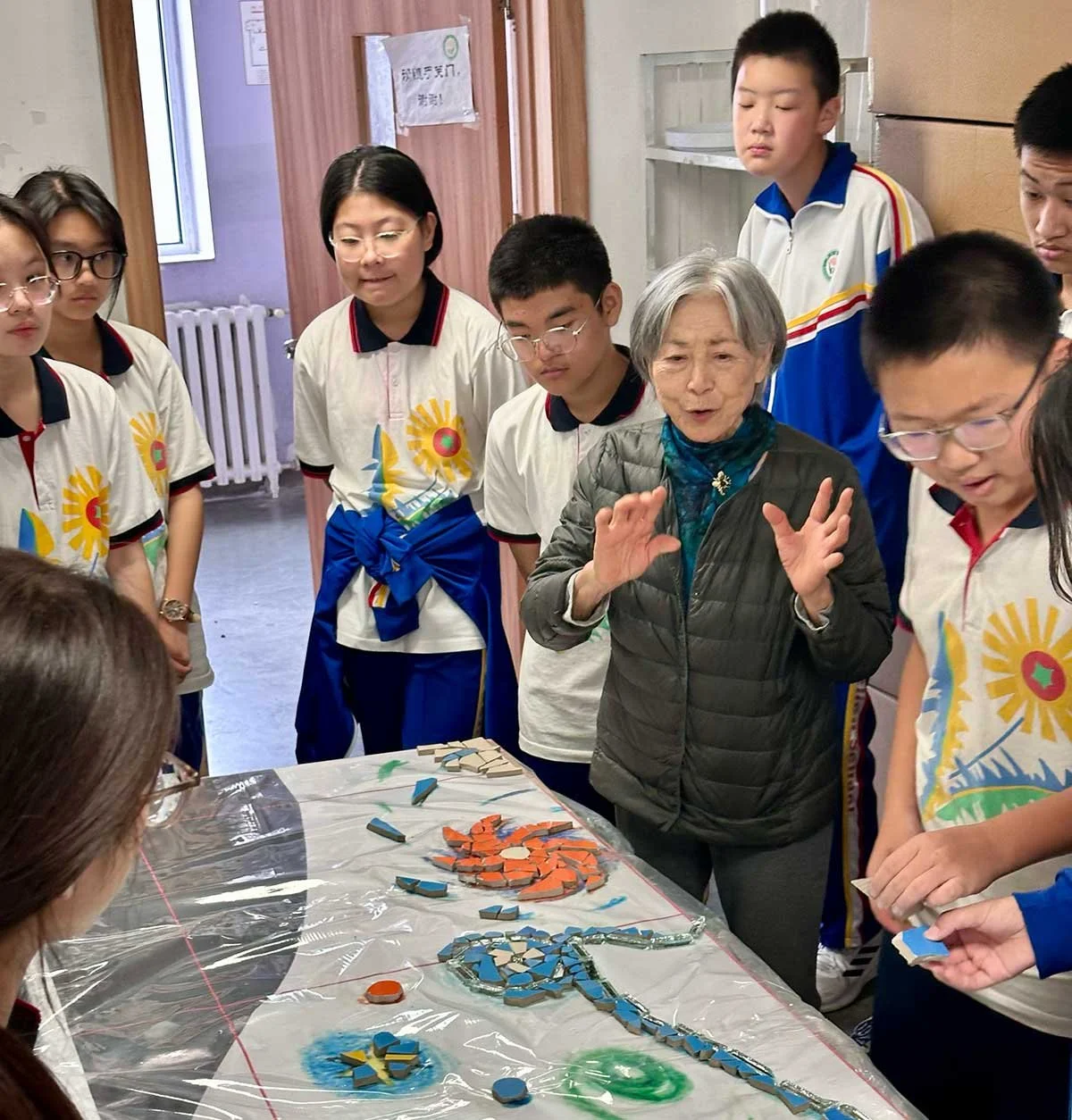
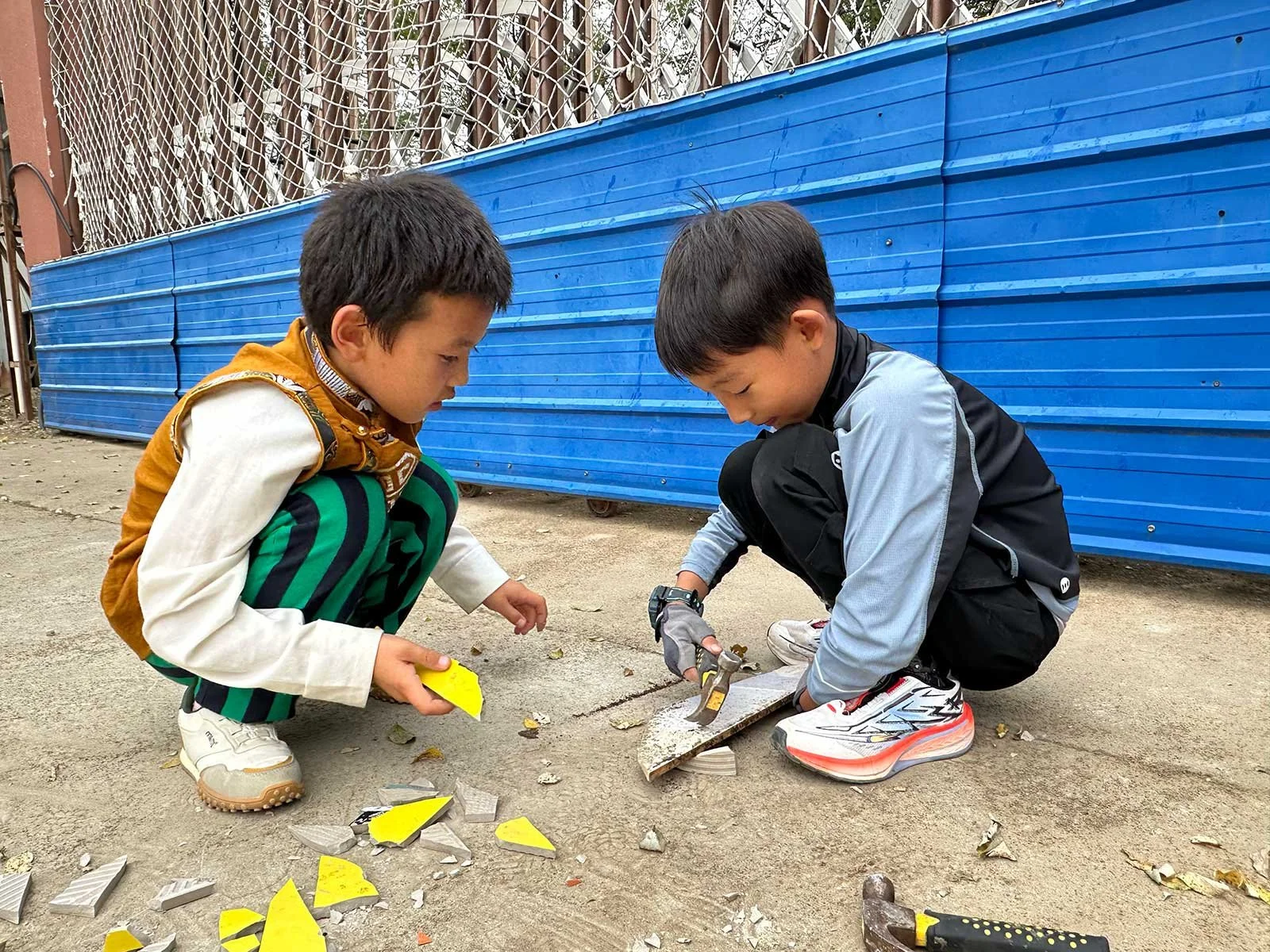
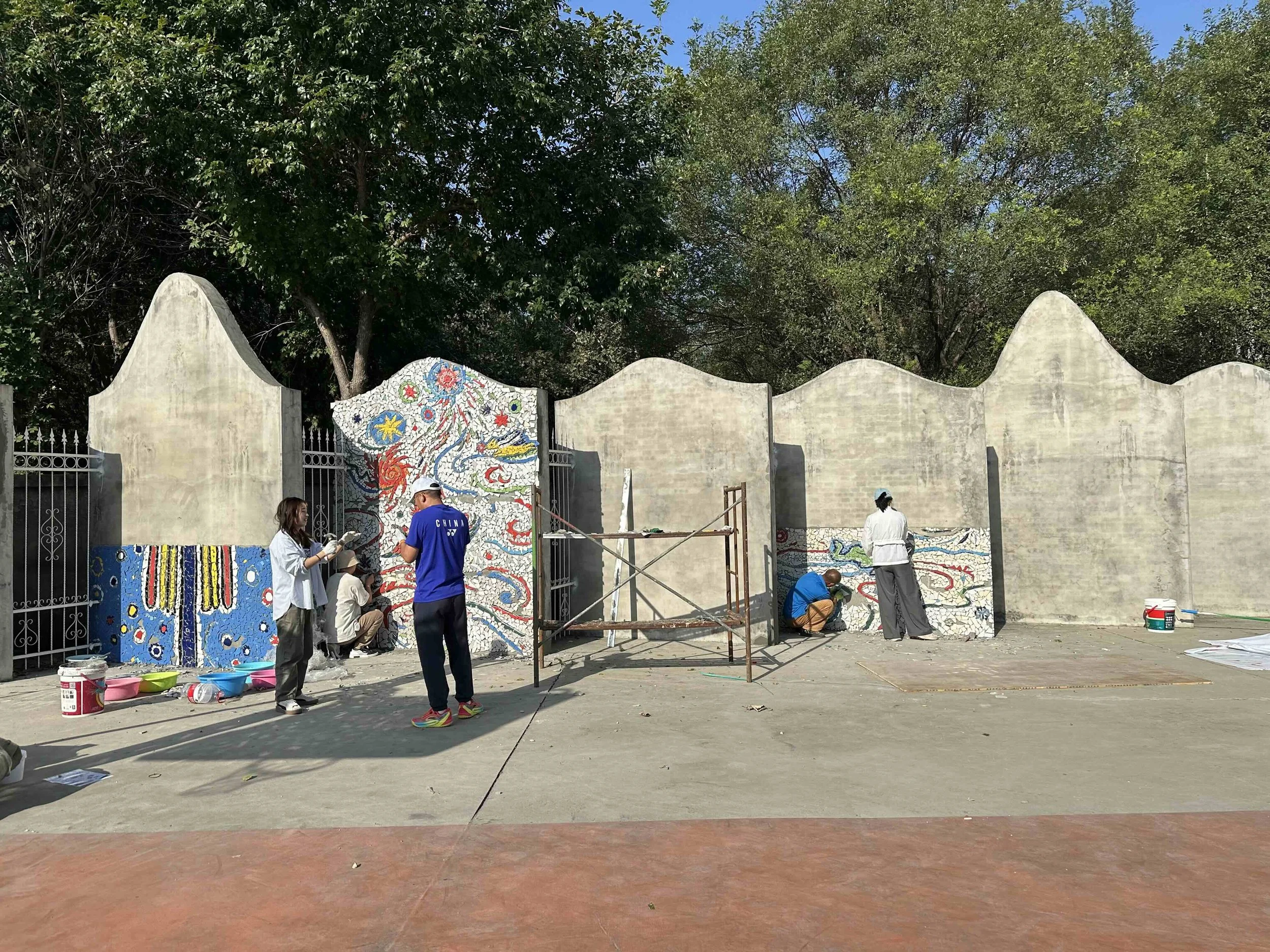
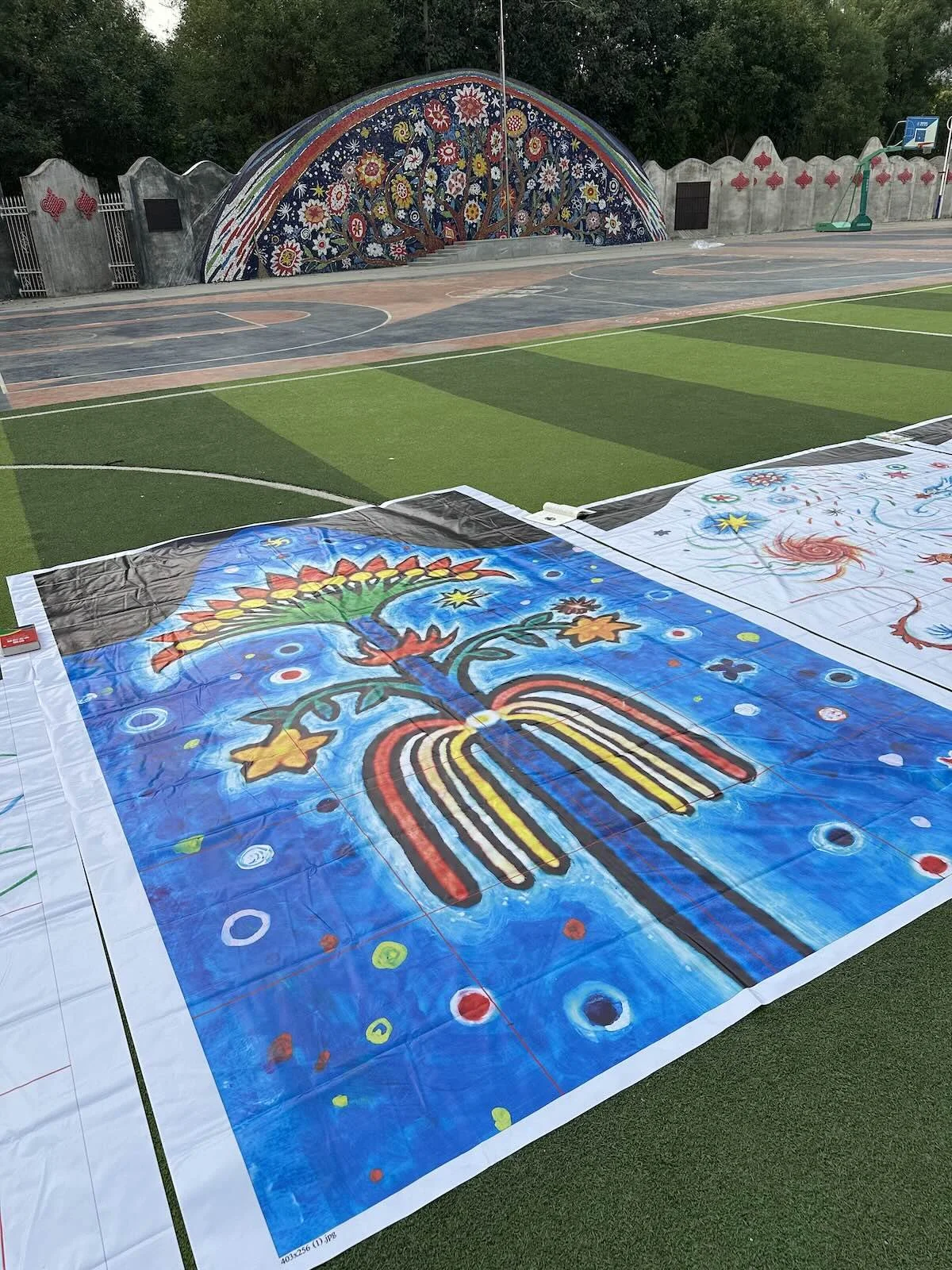
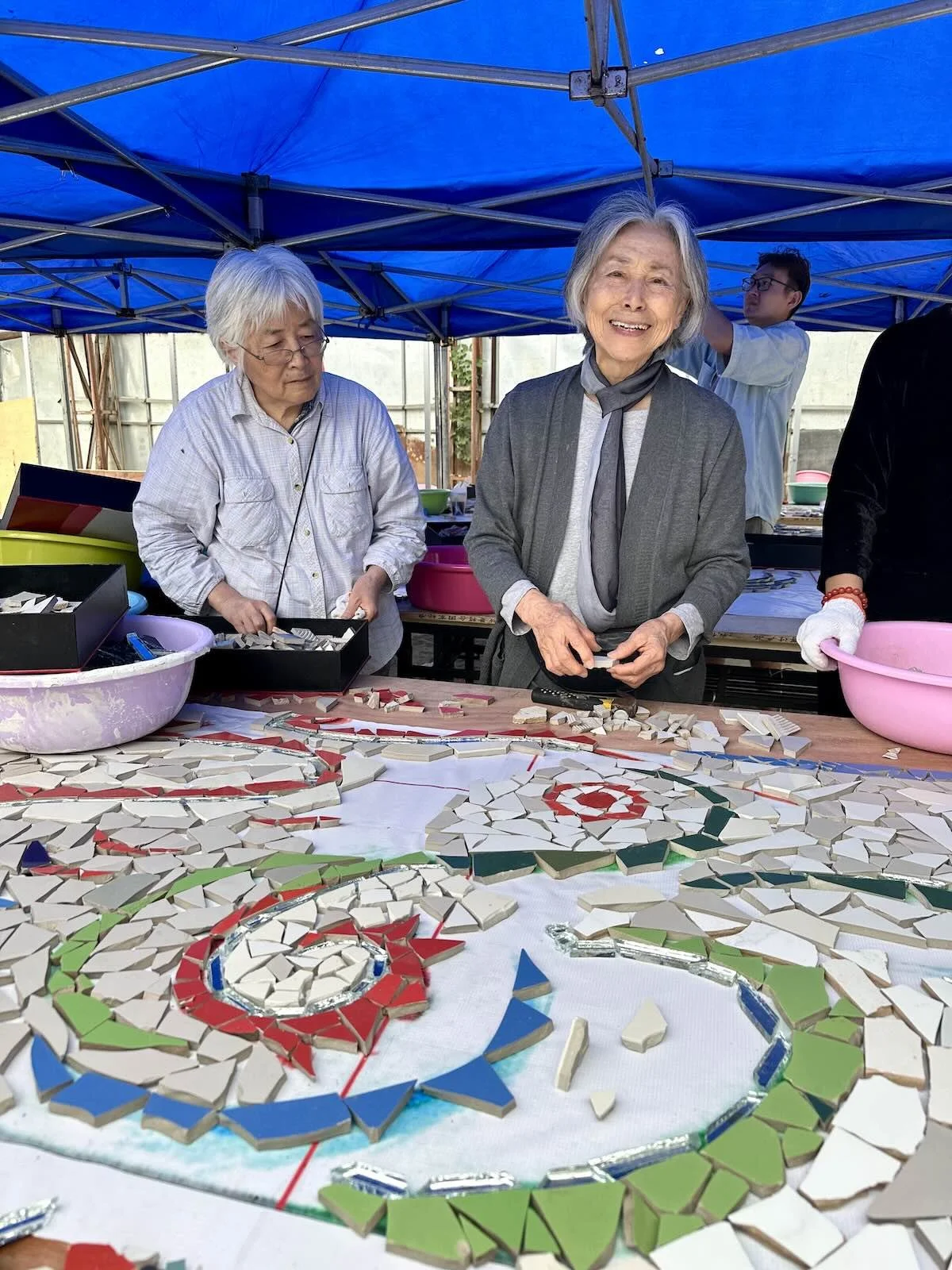
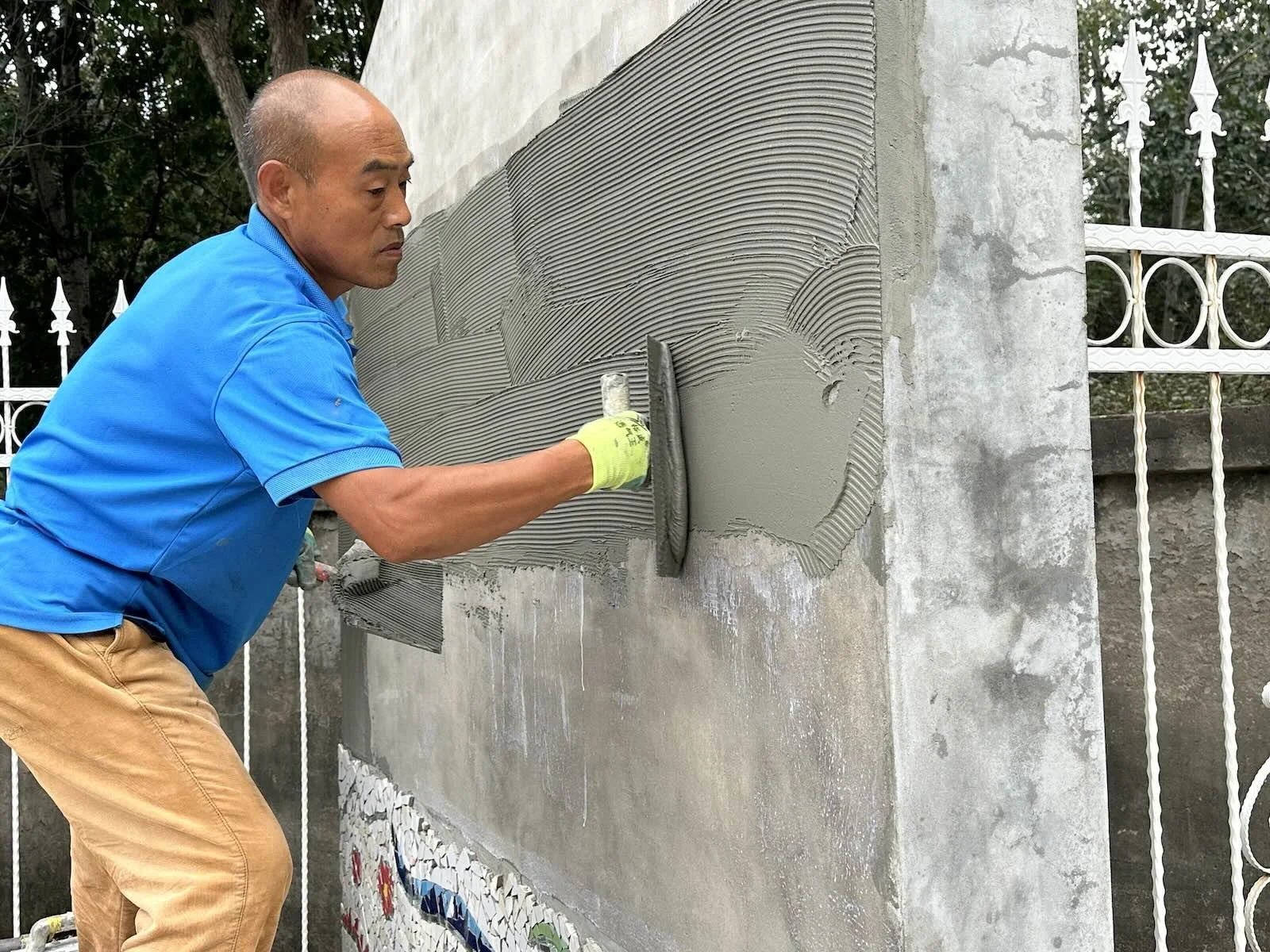
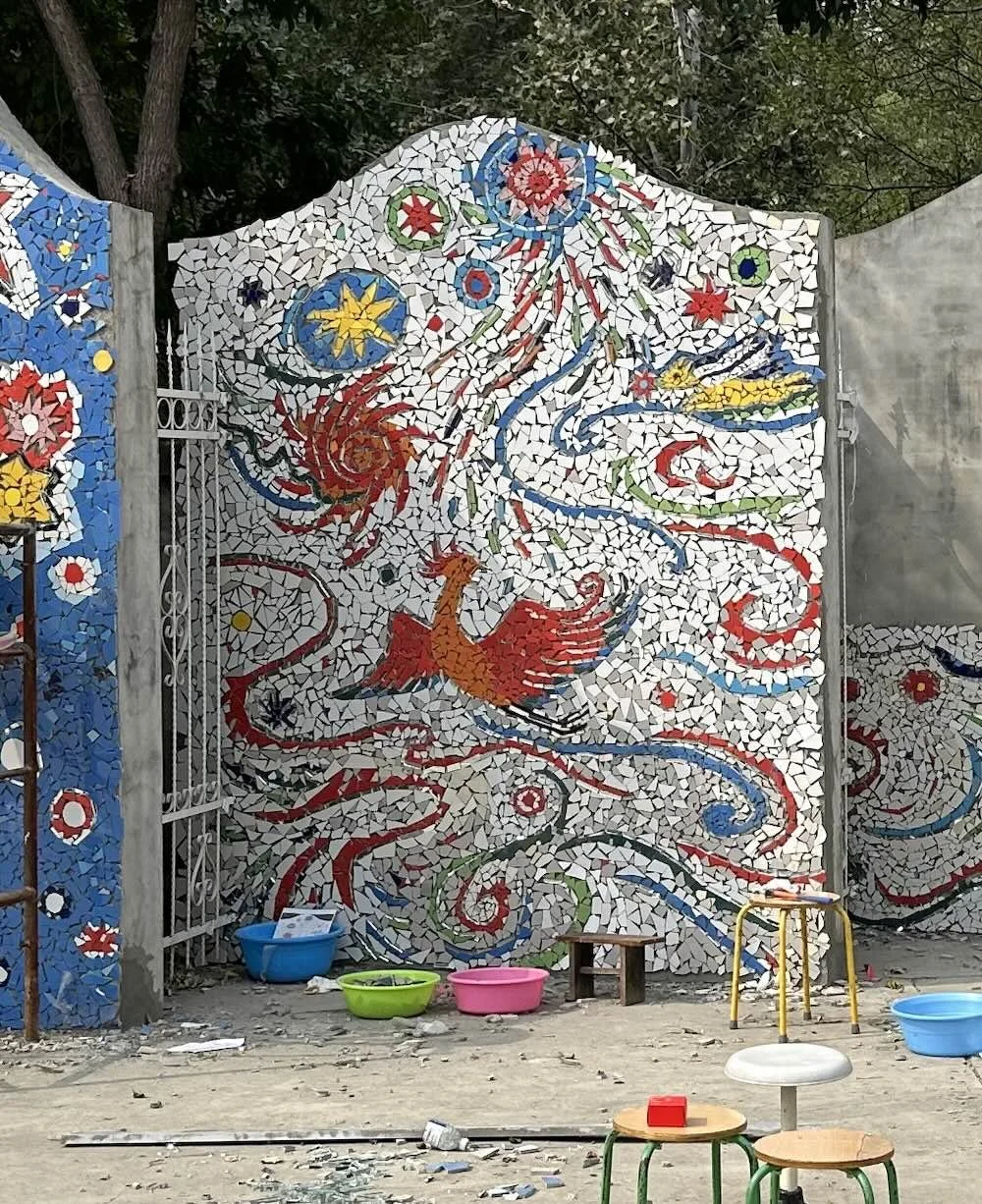
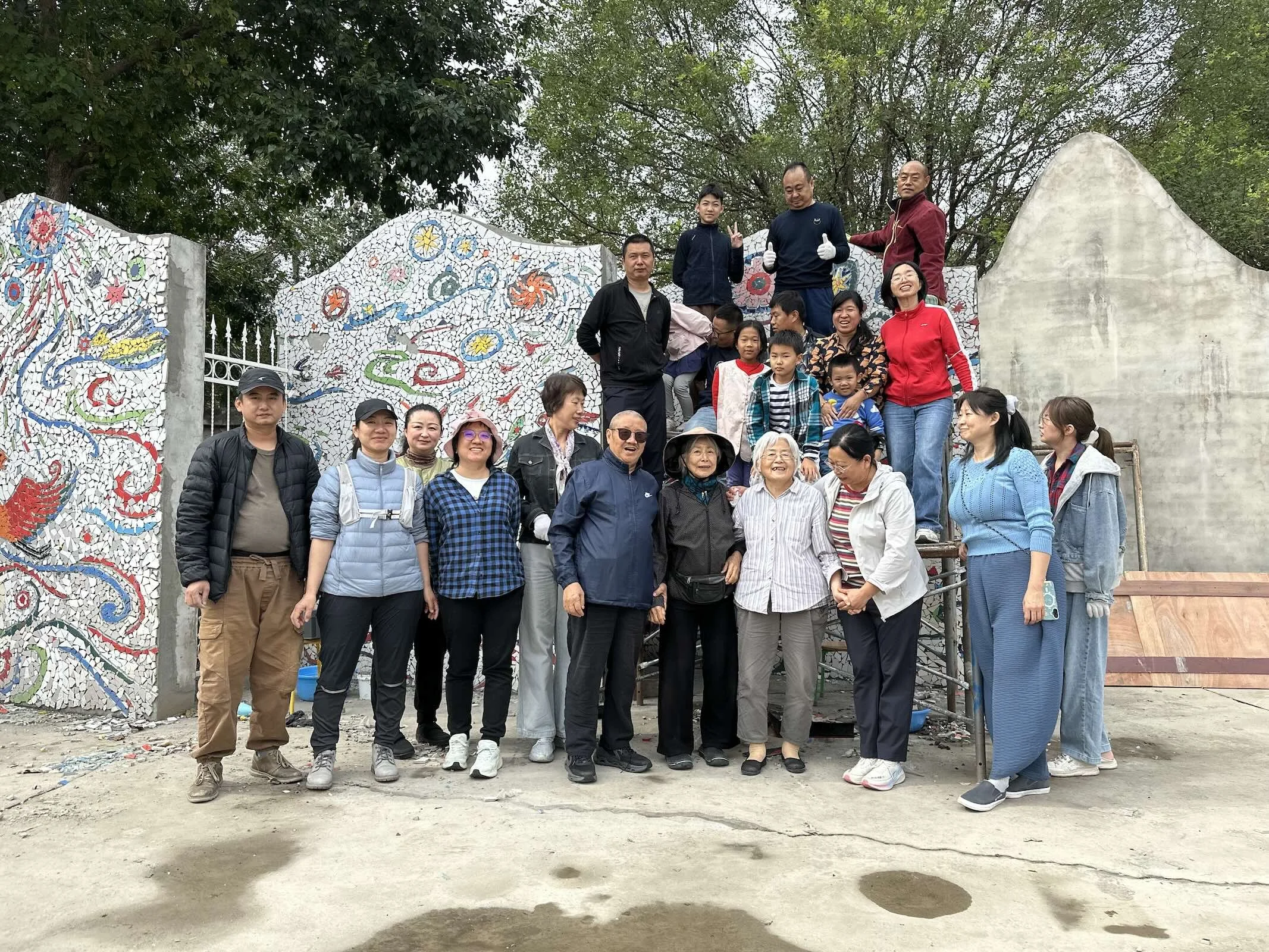
Lily Yeh and Barefoot Artists returned to Dandelion in September 2025 for the second phase of a monumental mosaic mural project in conjunction with the 20-year anniversary of the school.
In the Fall of 2023, Lily spent 2 months working with the school’s art teachers, students and hundreds of volunteers to complete Dandelion Rainbow Tree of Life, a 100 x 20-foot mural at the heart and center of the piece. Phase II of the project sees 11 panels on either side of the central mural (22 panels in all) covered in a sprawling, swirling mosaic that combines figures from Chinese myth with fantastical creatures and characters from Yeh’s imagination — all in her signature style.
To learn more about the most recent phase of the Dandelion project click here.

Twa transformation continues in 2025
Hehu Village: A New Beginning for Twa Families
A new Twa community has taken root in Hehu, near Gasiza in the Bugeshi Sector. 36 families and 46 children now call this place home—many having recently arrived, some crossing from Congo to escape conflict.
For generations, the Twa lived in the forest near the Nyamuragira Volcano along the Rwanda–Congo border, gathering wild vegetables, fruits, and meat in harmony with nature. When access to the forest was lost, their traditional way of life collapsed. Without land or farming experience, many struggled to survive, often resorting to begging or stealing just to feed their children.
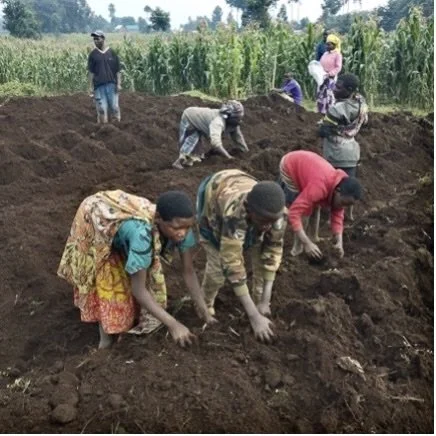
Our work in Hehu supports their transition into a new life. We help families learn to cultivate land, raise small animals, and grow home vegetable gardens—regaining the nutritious foods they once gathered in the forest. Children are learning about healthy eating, and families are discovering that life outside the forest can still be dignified and sustaining.
These efforts are small first steps, but they bring the promise of stability and renewed hope to the Twa families of Hehu Village.
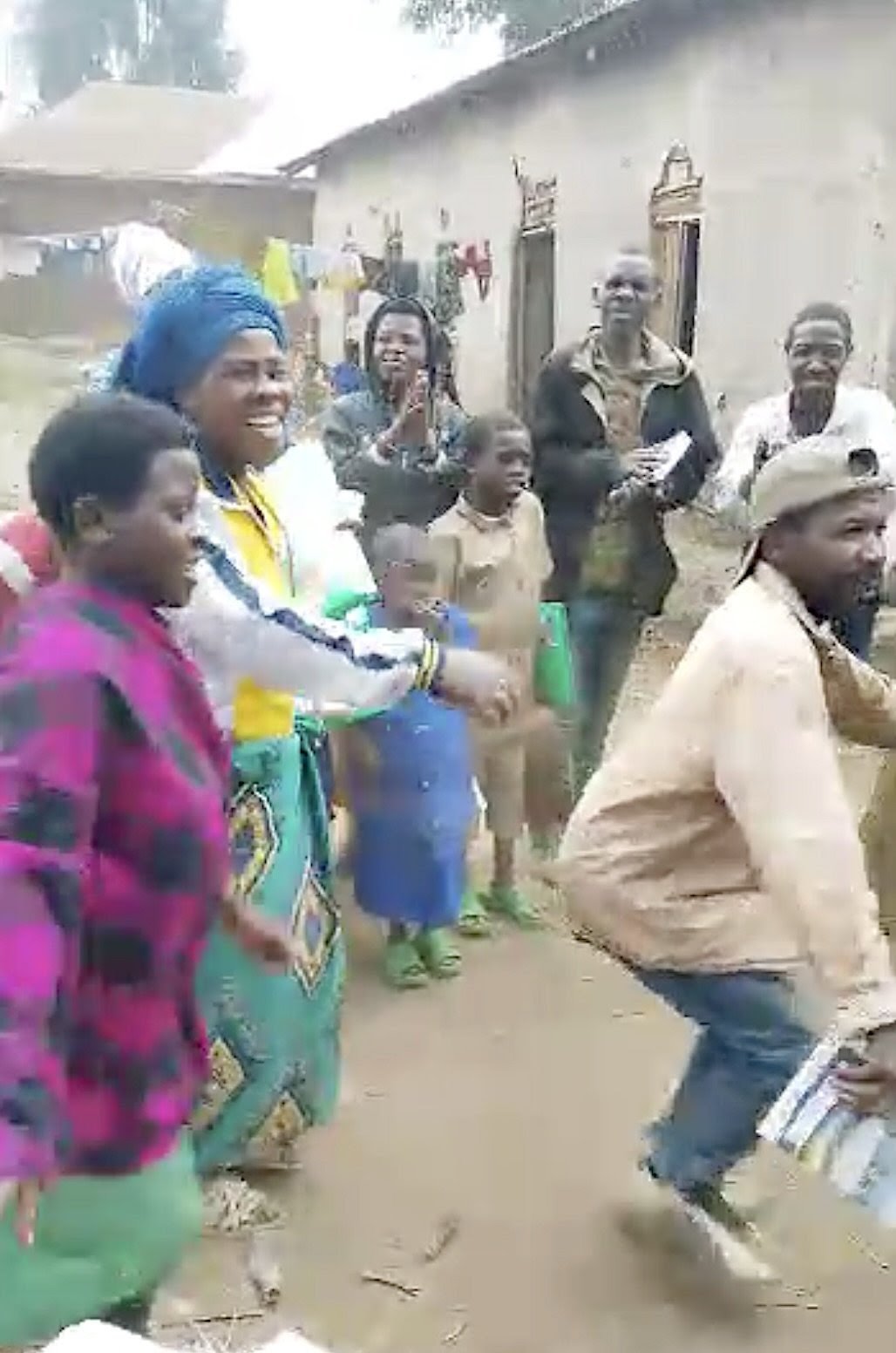
The community celebrates during distribution.
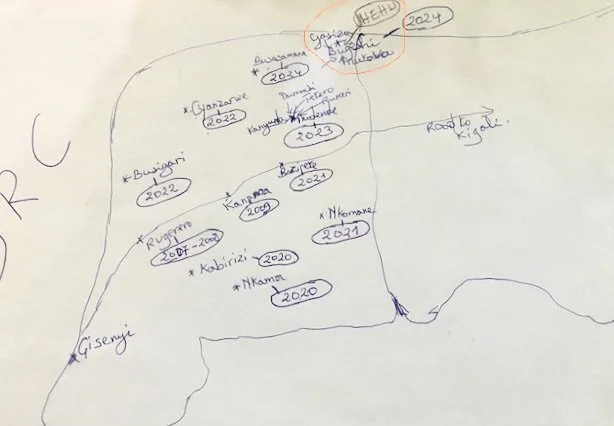
Map of the Twa villages.
A Stronger Path Forward for Twa Children
Through years of working with Twa communities, we have learned a simple truth: the real future for the Twa depends on their children receiving a good education. In two earlier groups we supported, one succeeded while the other faltered. This contrast taught us that hope alone is not enough—we must strengthen our support to ensure lasting change.
With this in mind, we have established child-monitoring committees in the Twa communities of Bugeshi, Hehu, and Gasiza. These committees bring together local authorities and Twa parent representatives to encourage school attendance and ensure children feel respected and supported in their classrooms.
After several days of preparation—collecting uniforms, shoes, notebooks, pens, folders, and soap—we were able to distribute full school kits to 118 children. Even in the rain, the celebration was filled with joy, gratitude, and a sense of new beginnings as families gathered for this important moment.
Today, these children are walking to school with dignity, pride, and renewed confidence.
“By strengthening community support and providing full school kits to 118 children, we are helping Twa families build a hopeful future through education.”
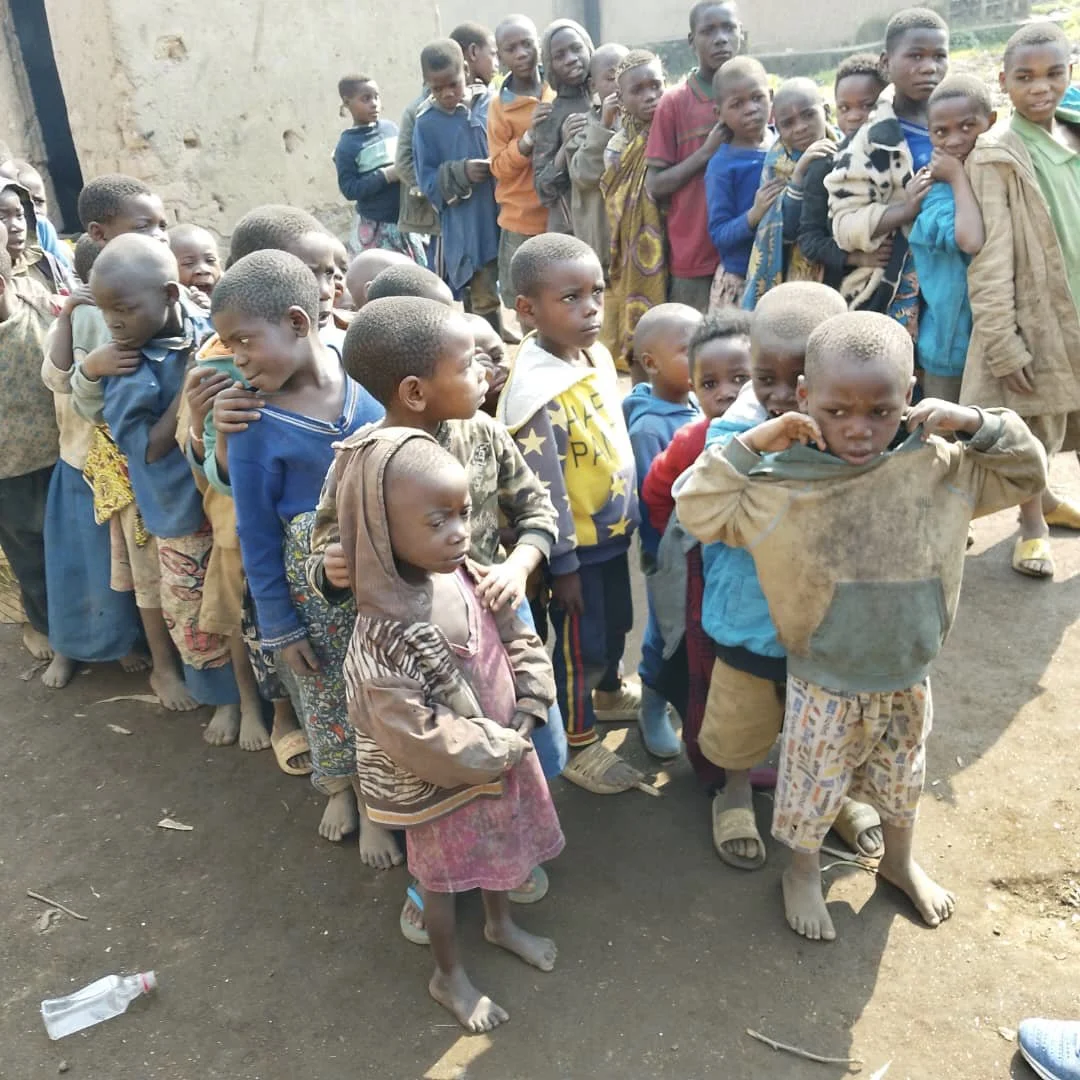
Some of the 116 school-age Twa children, waiting patiently for their uniform measurements.
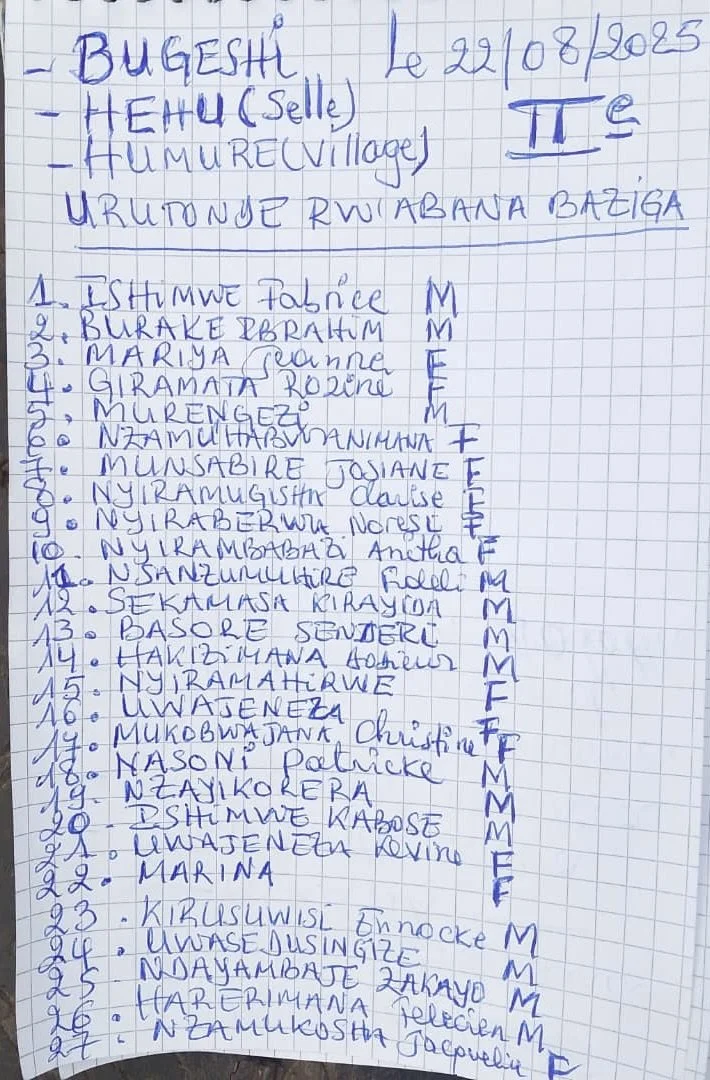
Handwritten list of children needing support, carefully recorded by the program director.
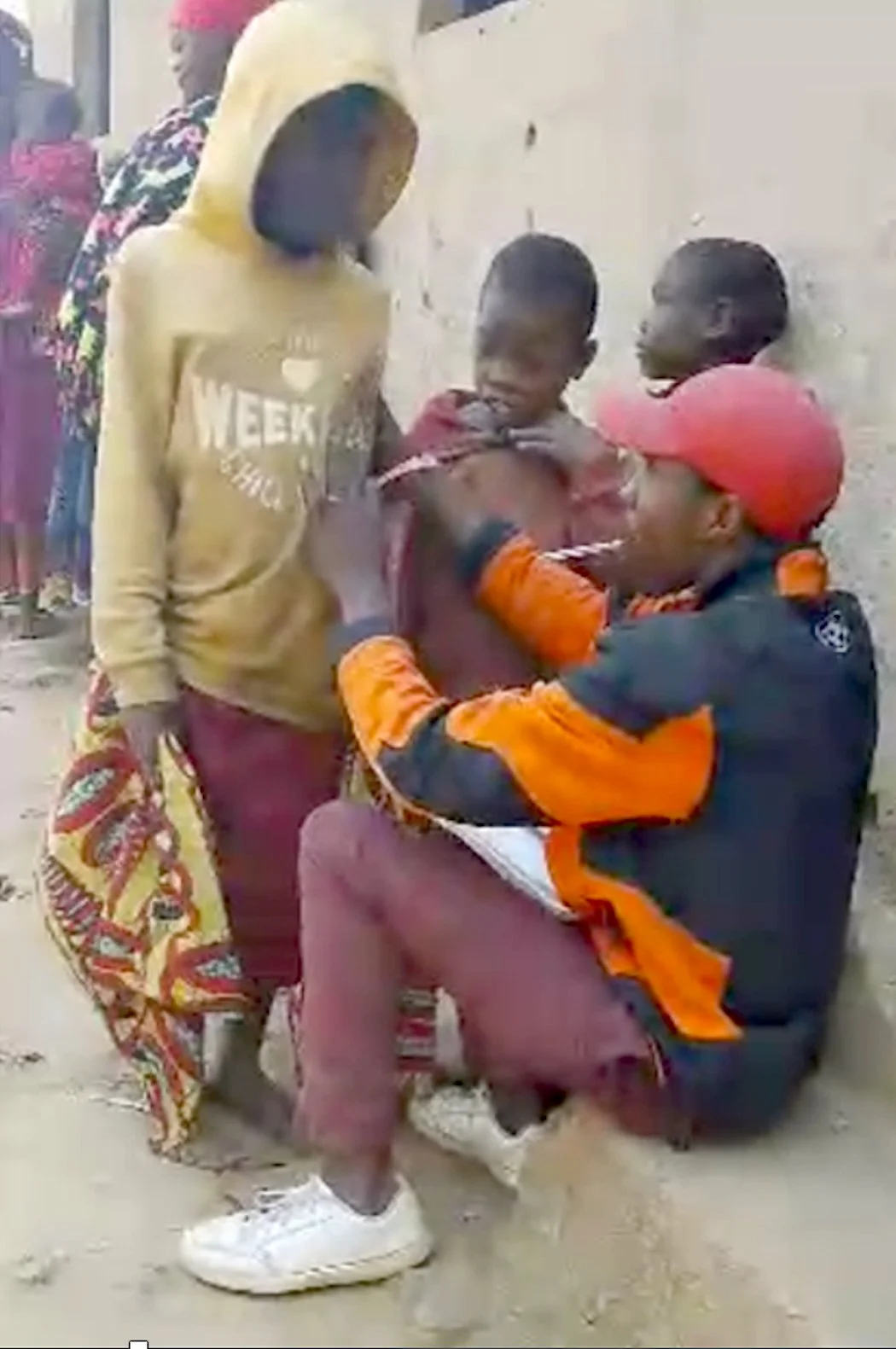
The tailor measuring and noting each child's size, ensuring a proper fit for every uniform.
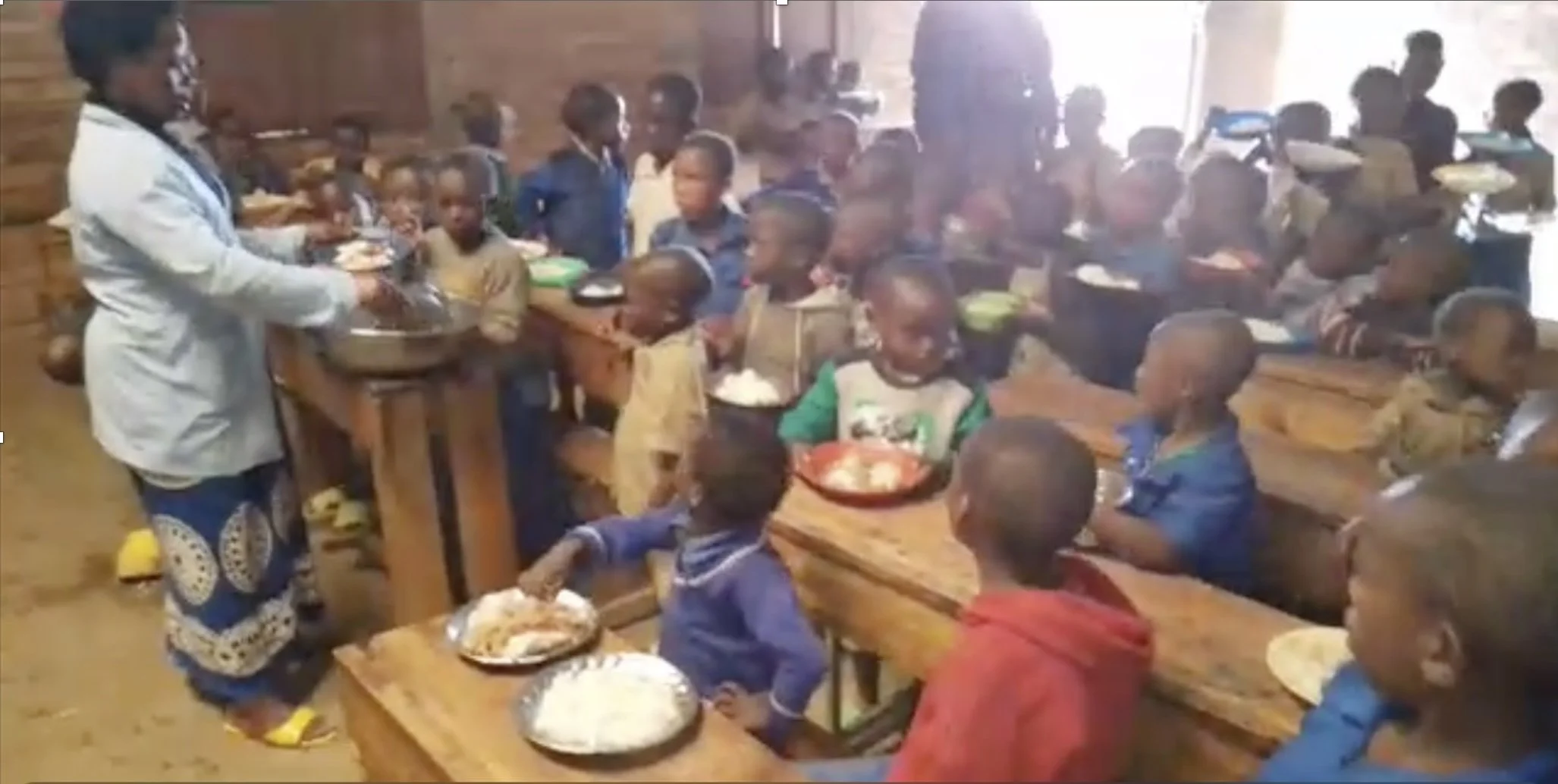
Children in their uniforms enjoying a meal together at school.
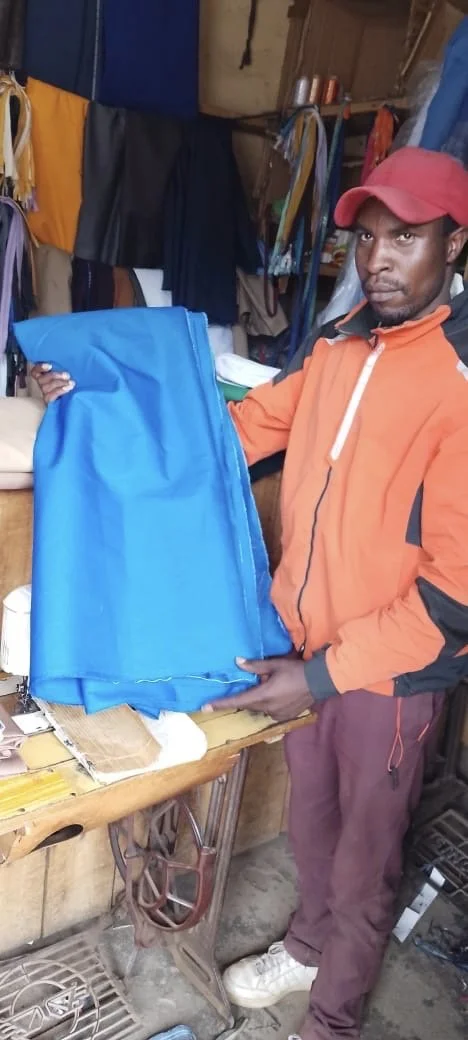
The tailor presenting the fabric for girls’ uniforms, marking the beginning of the sewing work.
Alfajiri street Kids’ Art (Mathura, Nairobi)
A Tree of Life Unfolding
Out of many hands and colors, hope rises in Mathare, one of the oldest and largest informal settlements (slums) in the city — a Tree of Life.
After Lily Yeh’s TED Talk in 2024, she received a message from Lenore Boyd, director of Alfajiri Street Kids Art in Nairobi. One of the ways her organization helps children once living on the streets find new life through art.
The young artists had become skillful in painting their own works, but they had never learned how to create together. Lenore invited Lily to guide them — to help weave their individual gifts into a shared vision of beauty through public art.
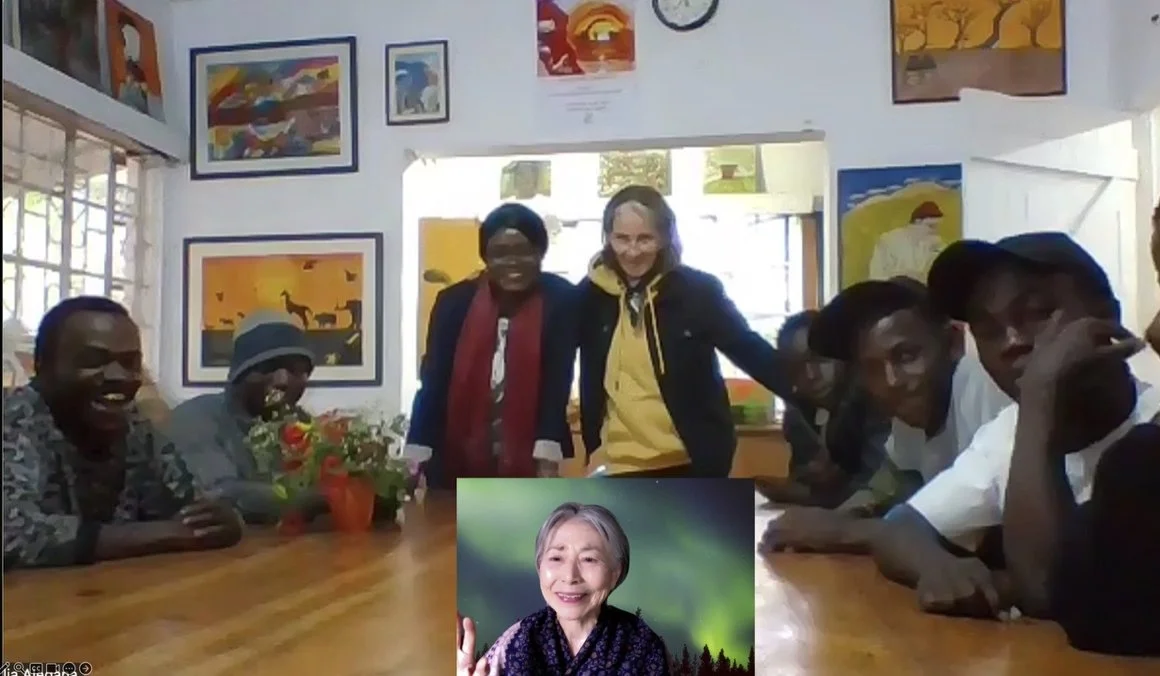
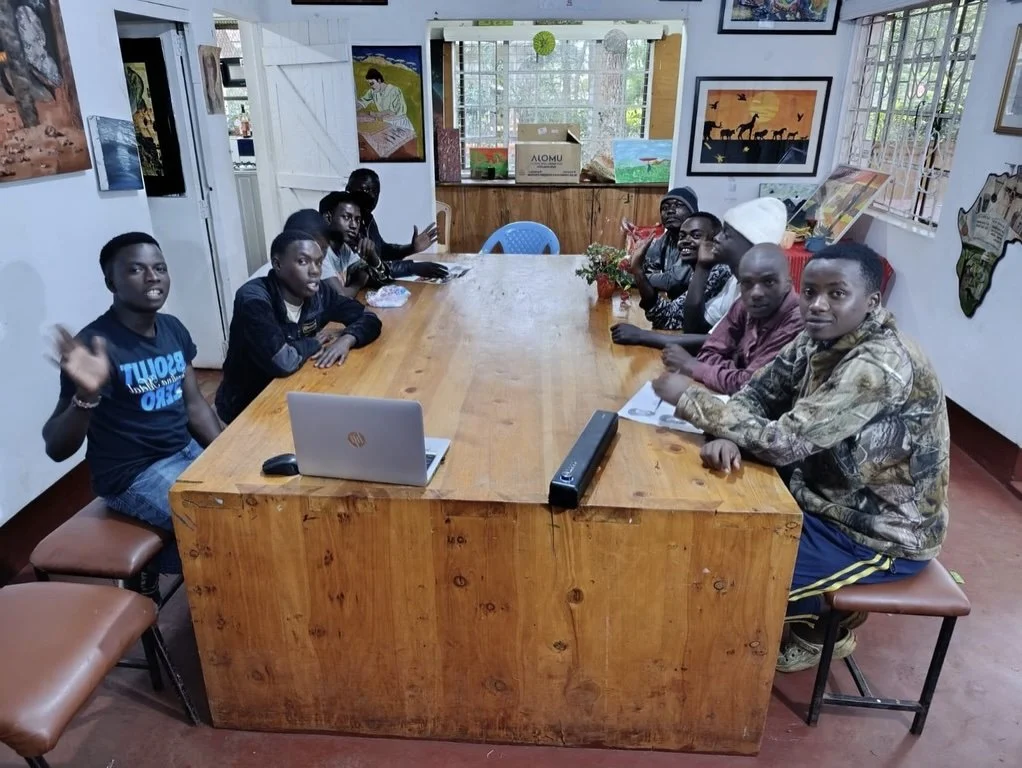
Through online workshops, Lily guided them on design, color, and rhythm. She also designed a Tree of Life, painted in bright colors, simple, radiant, and alive. Barefoot Artists provided them with best quality paints to ensure the success of the mural.
To learn more about the Alfajiri project and see more photos click here.
smithsonian exhibition
Breaking down walls
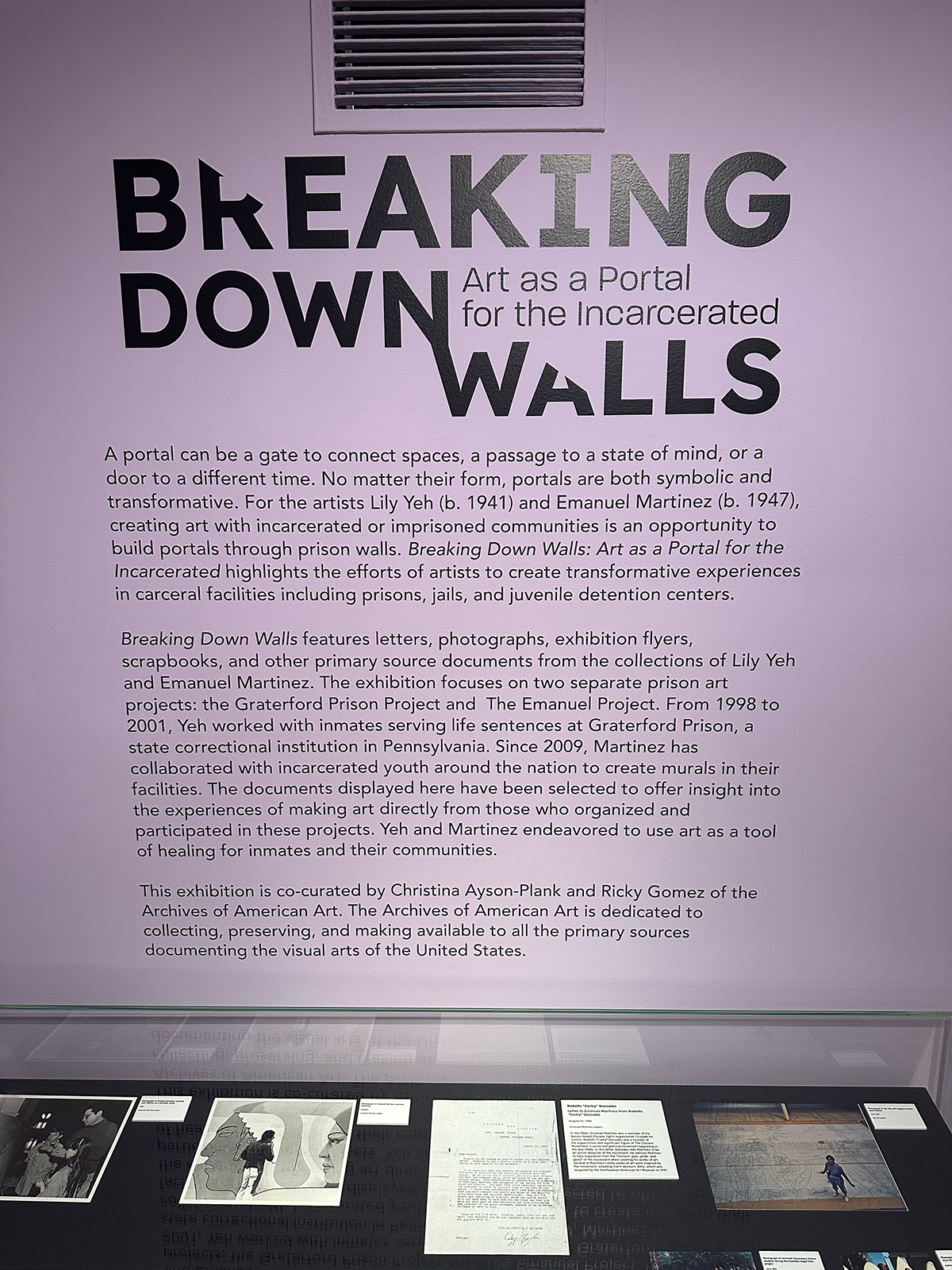
Lily Yeh’s work with inmates at Graterford Prison in Philadelphia is currently being featured as part of an exhibition at the Smithsonian in Washington, DC. Breaking Down Walls: Art as a Portal for the Incarcerated highlights the efforts of 2 artists, Lily and Emanuel Martinez, to create transformative experiences through art for inmates in carceral facilities. Recently, Lily visited the exhibition. She shares her account here.
Workshops & Presentations
Harvard Divinity School: Grief Workshop
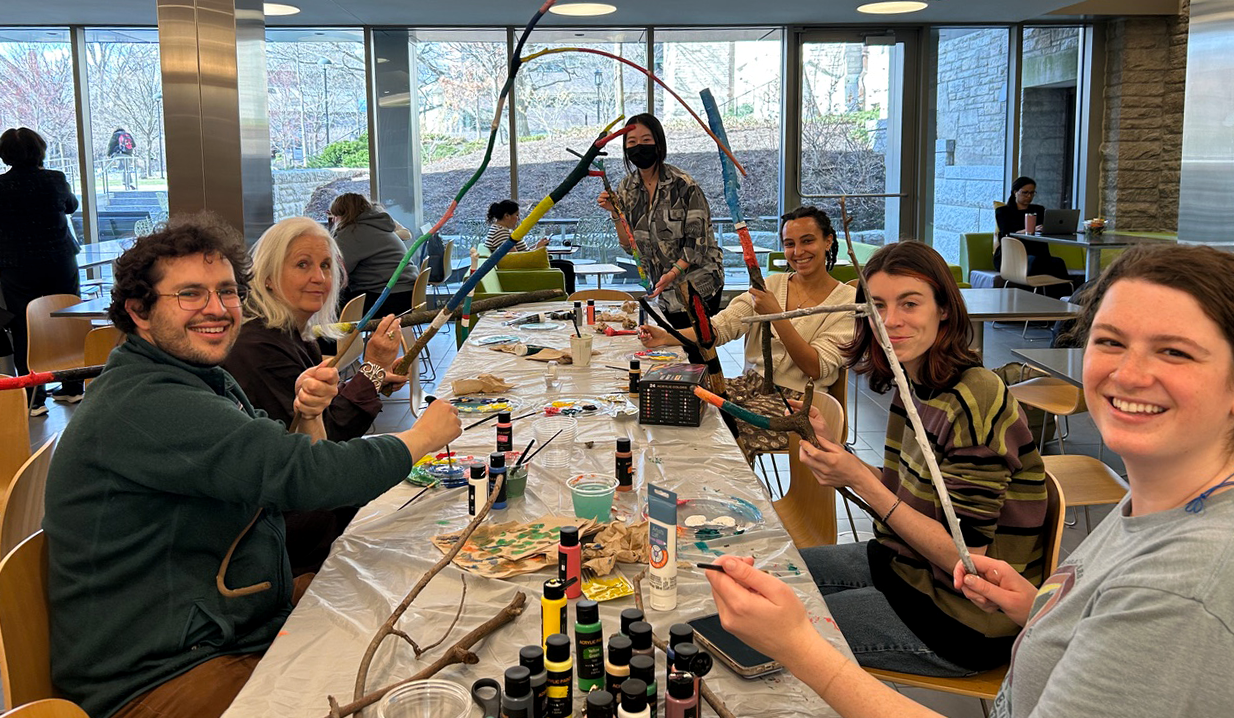
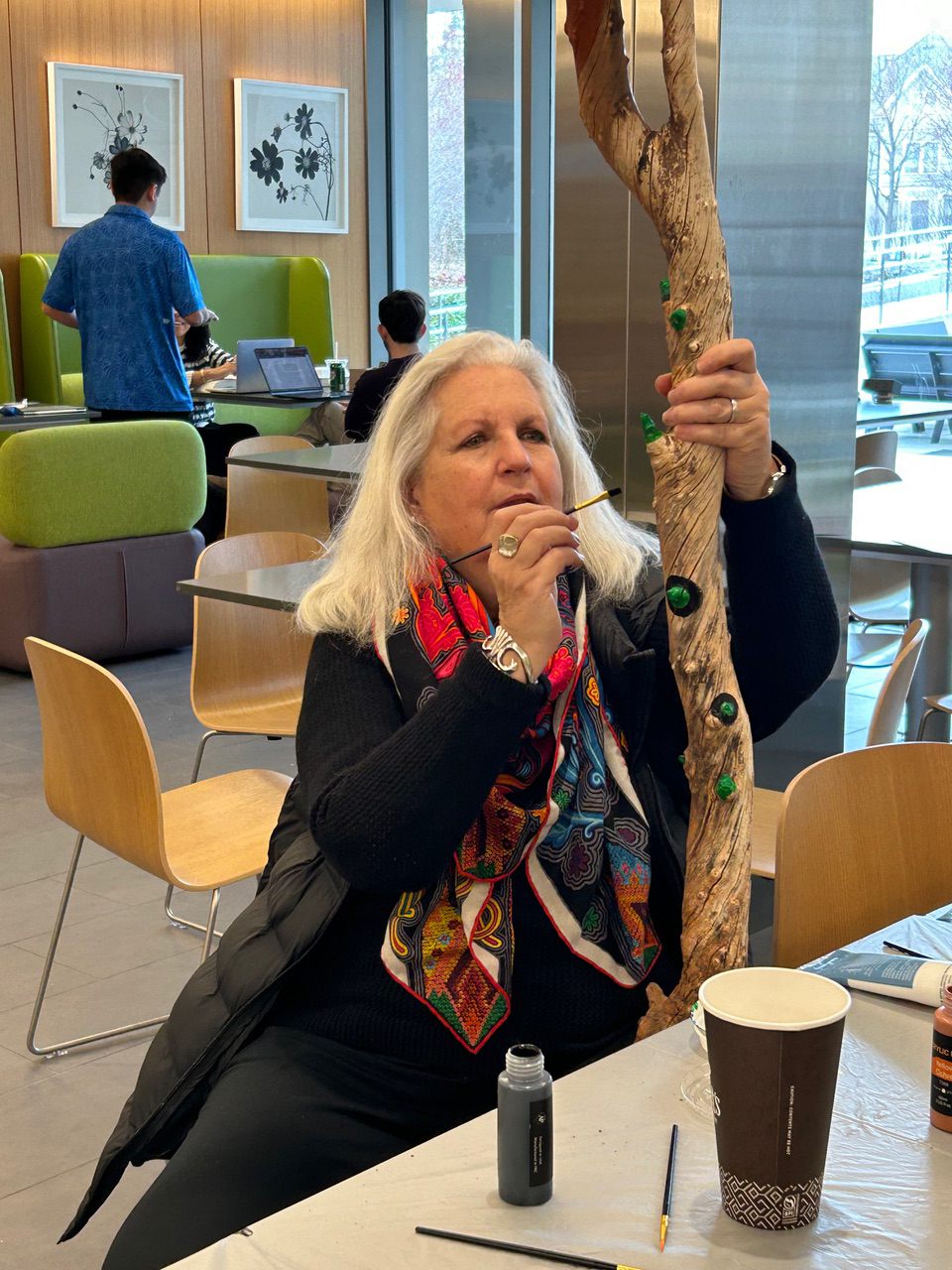
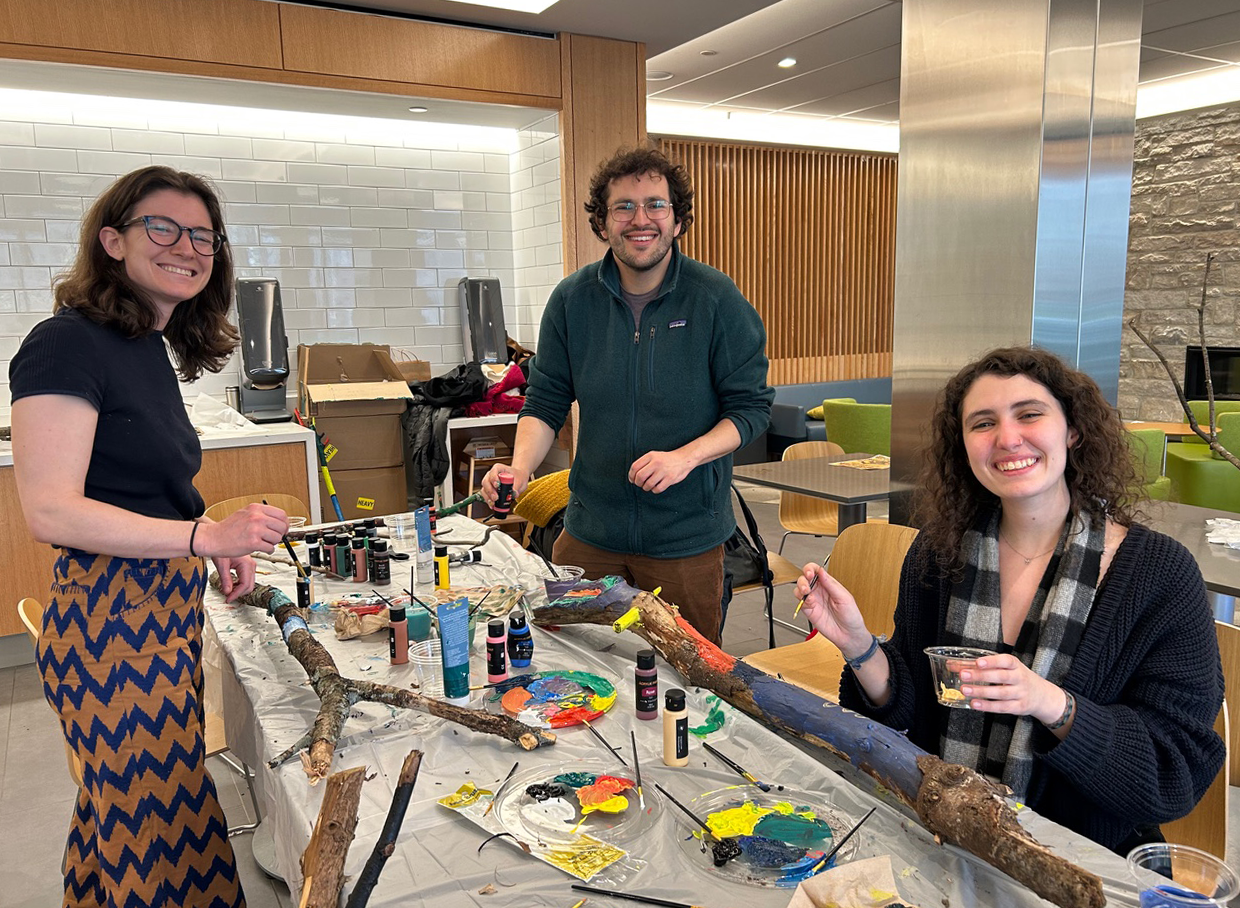
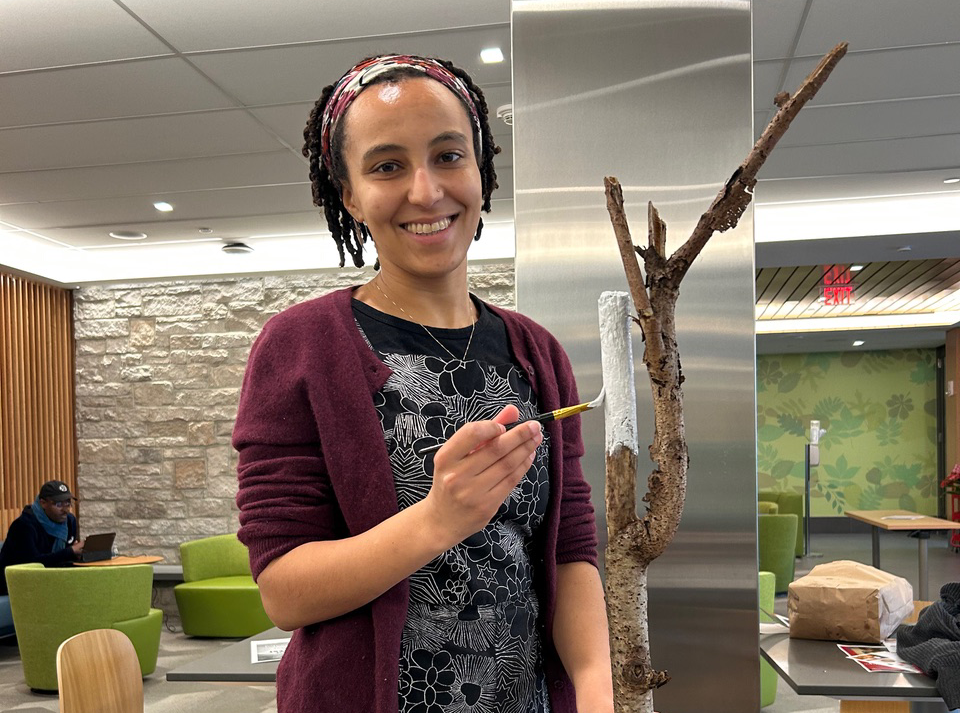
In March, Lily was invited to Harvard Divinity School by her longtime friend and sometime collaborator, Terry Tempest-Williams, to lead a week-long workshop during Grief Week. The week of storytelling, writing, art workshops and community building sought to reflect on the interwovenness of grief and love.
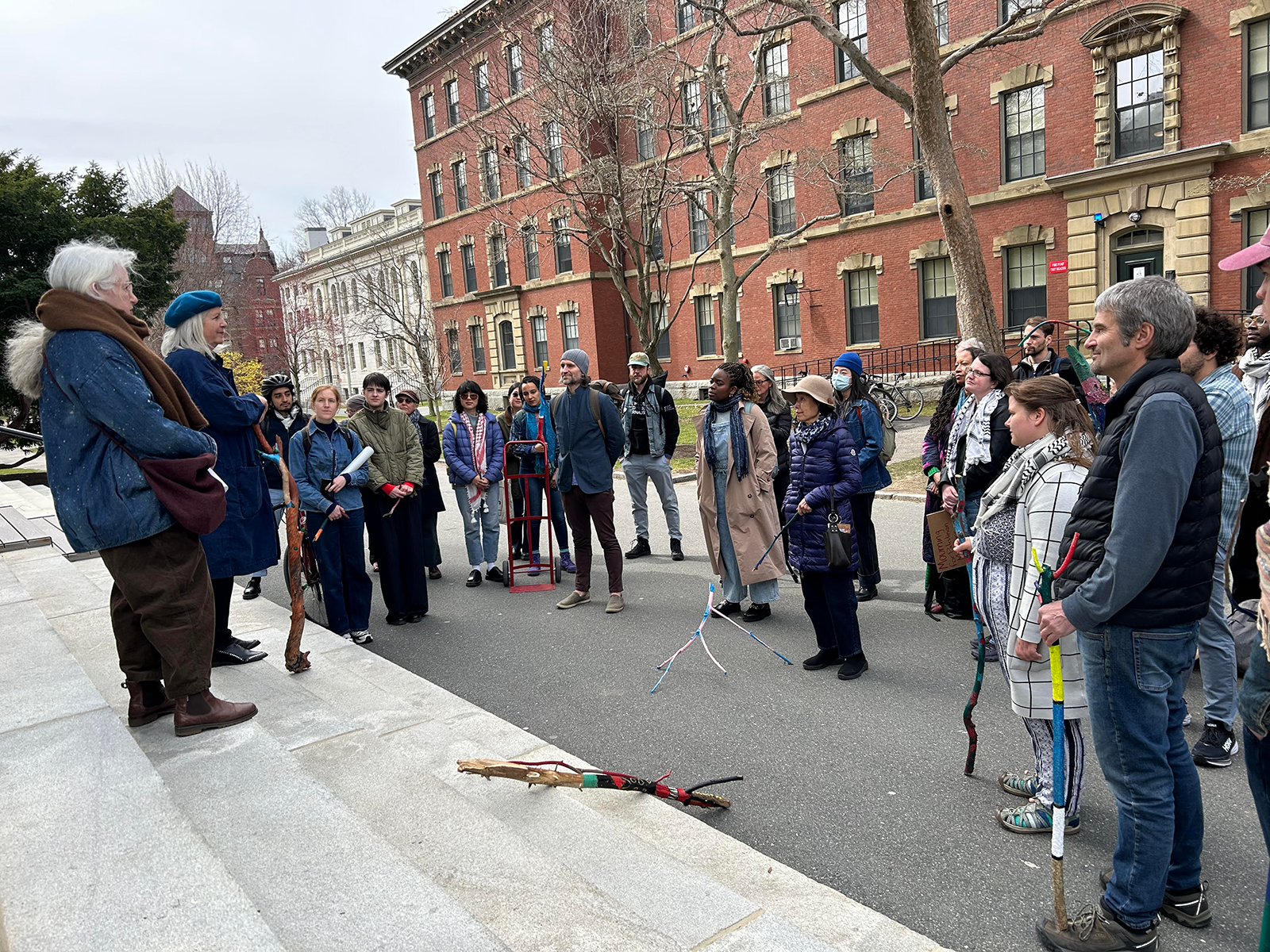
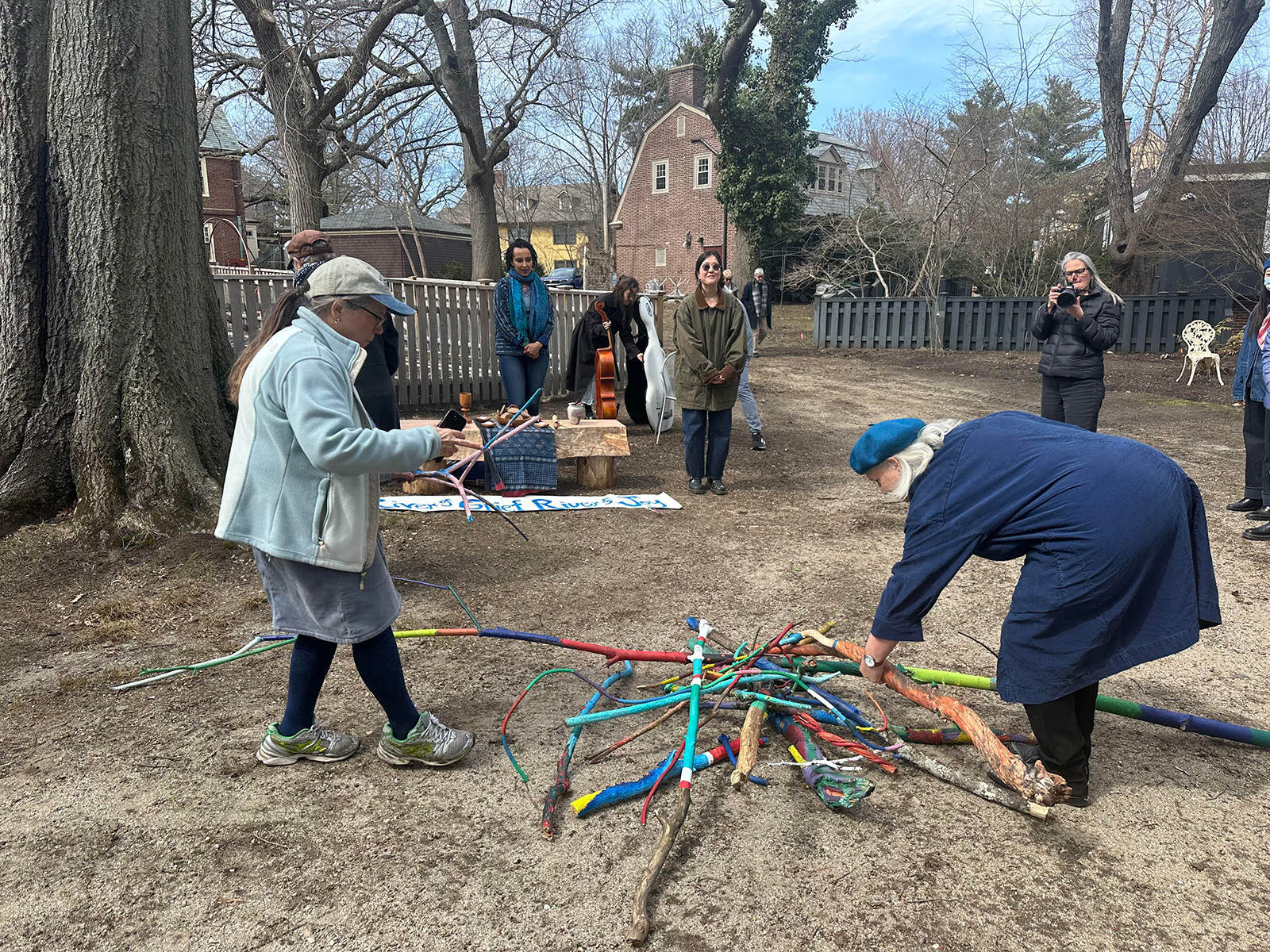
Lily guided students, faculty, and community members through a creative process that began with tree branches that had been broken, cut, or cast aside. They placed the branches upright, and painted them with care and attention. Through this process the materials were slowly transformed from debris into vessels of memory, grief and resilience. The making itself became a contemplative practice, opening space for reflection on loss, violence, climate devastation, and the fragile condition of our world.
Flyer for Grief Week.
The Banner & Procession
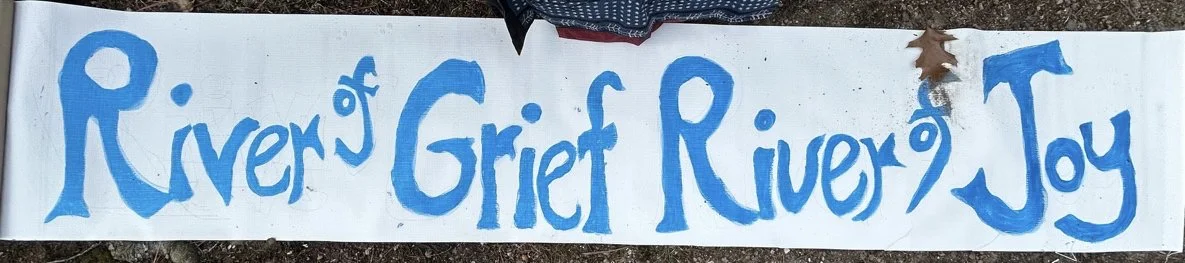
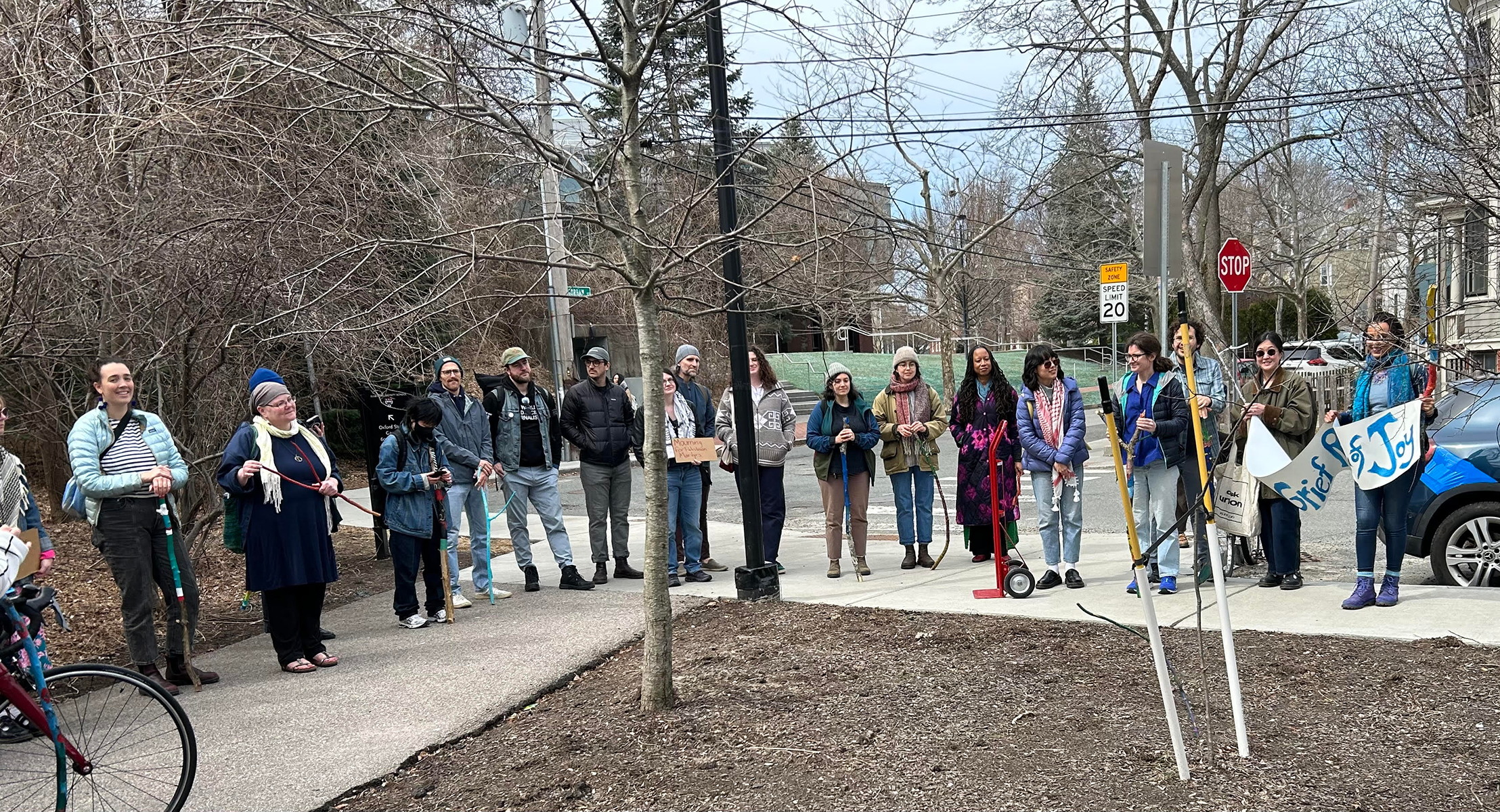
One especially moving moment came when a volunteer discovered a large broken tree trunk. She painted it with daringness and care and also created a banner reading “River of Grief, River of Joy,” which became the banner that led our procession.
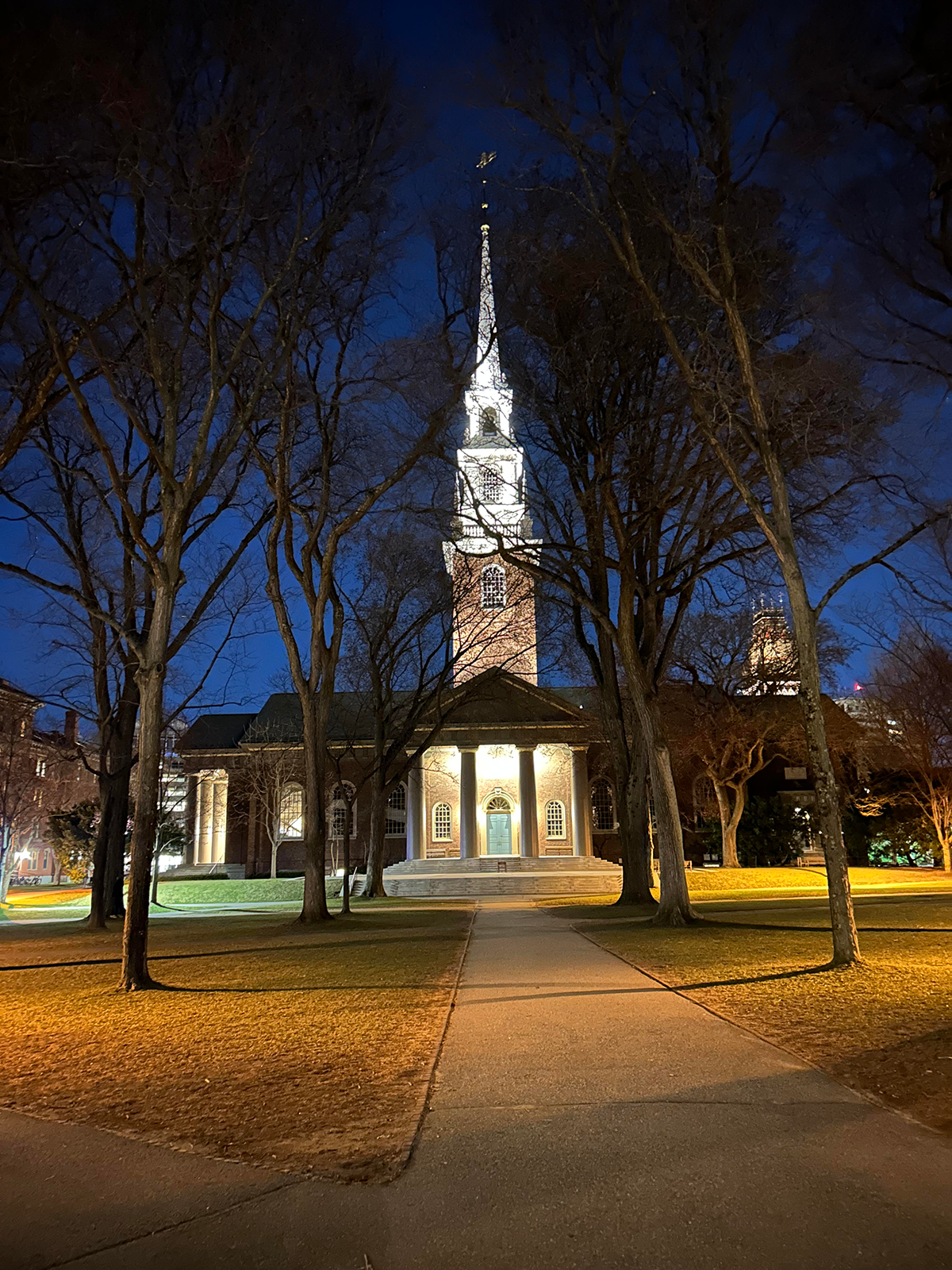
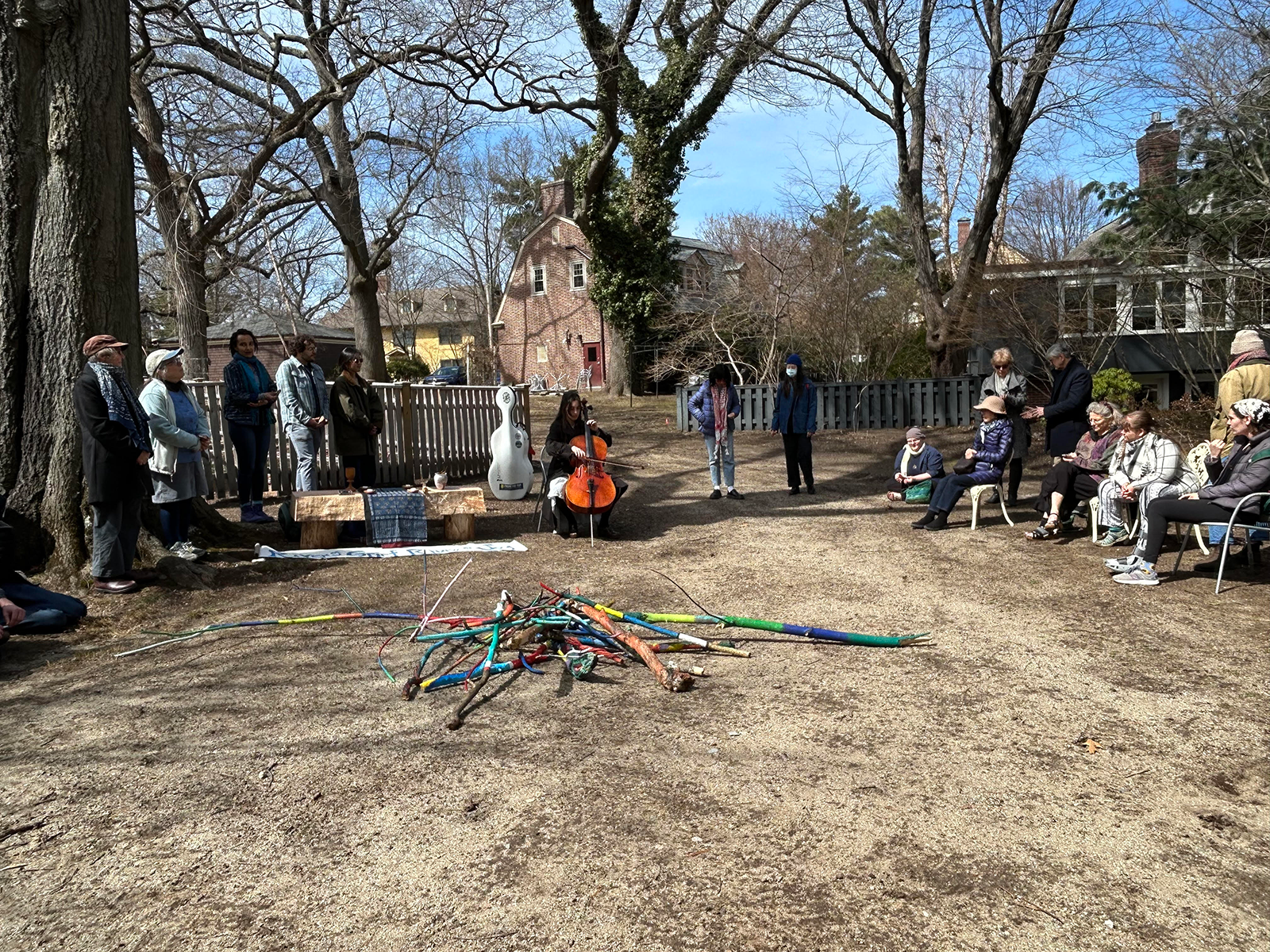
At the conclusion of Grief Week, the painted memorial poles were carried in a ritual walk organized by Terry. The procession moved from the historic Memorial Church to an open ritual space, where the poles were offered and stacked together like a living fire, an offering for healing. The ritual honored grief on many levels: global violence and genocide, ecological loss and climate catastrophe, and the cutting down of a beloved over hundred-year-old tree on the Divinity School campus to make room for new construction.
Ritual circle / poles gathered
A cello filled the space with a tender, steady presence, holding both the memory of loss and the possibility of hope. People shared bread and cookies made from acorns gathered from the ground, telling stories of grief, joy, and endurance. The sawed-off tree itself was welcomed home in another form—as a beautifully crafted bench, smooth and warm like silk, offering comfort through its continued presence.
Rather than seeking closure, the ritual allowed grief to be held together, through movement, music, shared food, and transformed materials, affirming grief as a form of love, responsibility, and care for the world.
From the Waters We Rise (Asheville, NC)
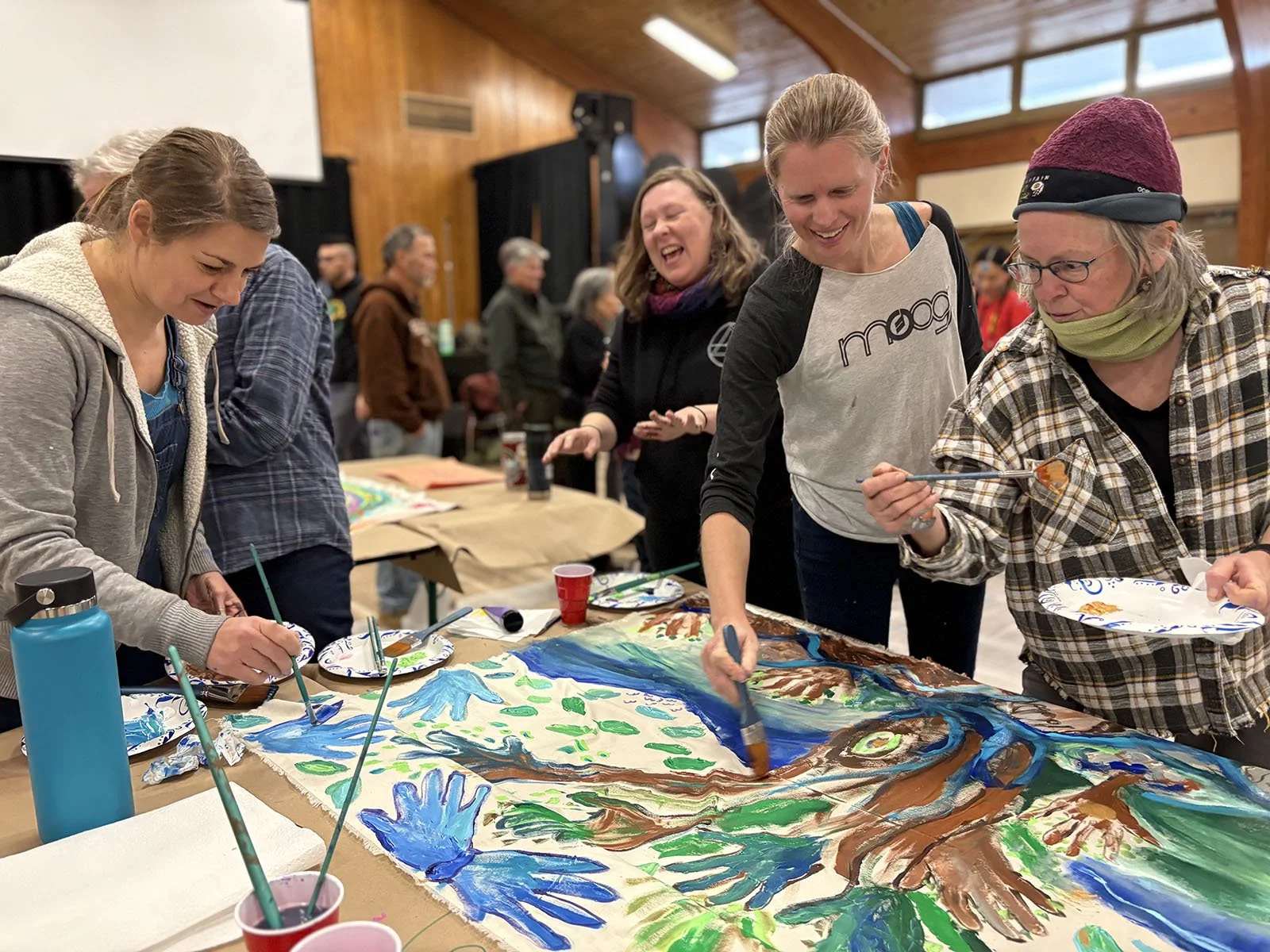
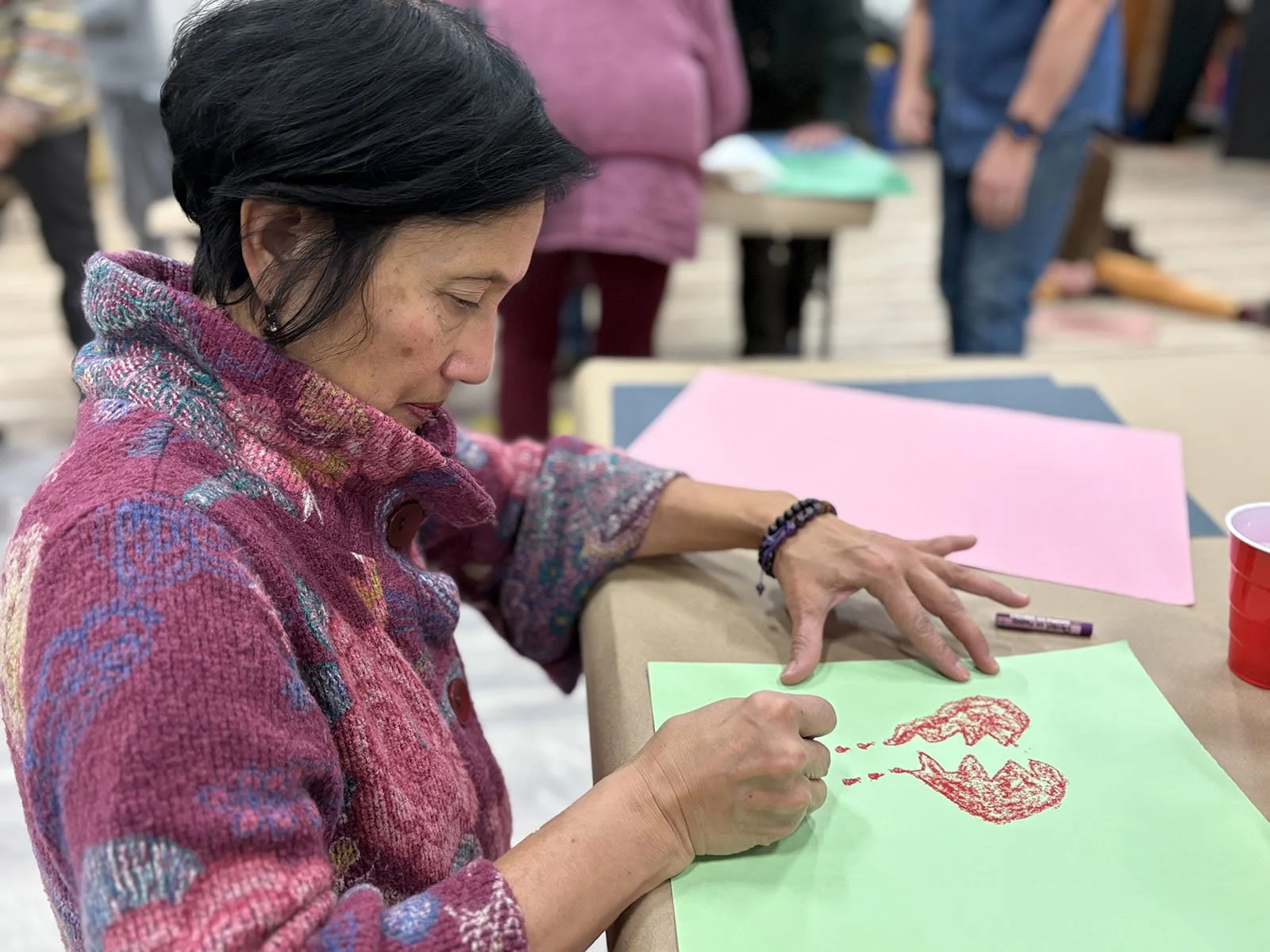
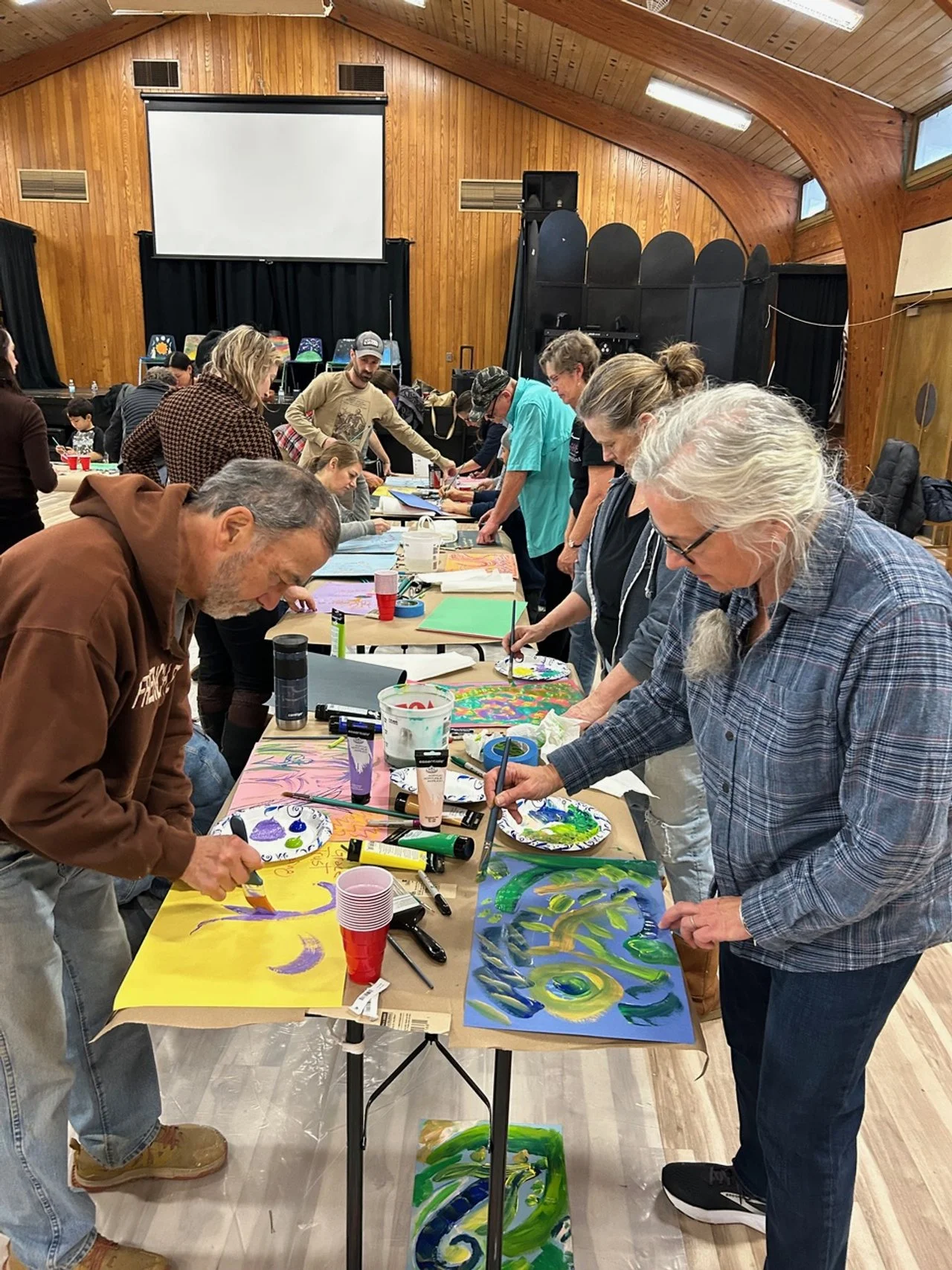
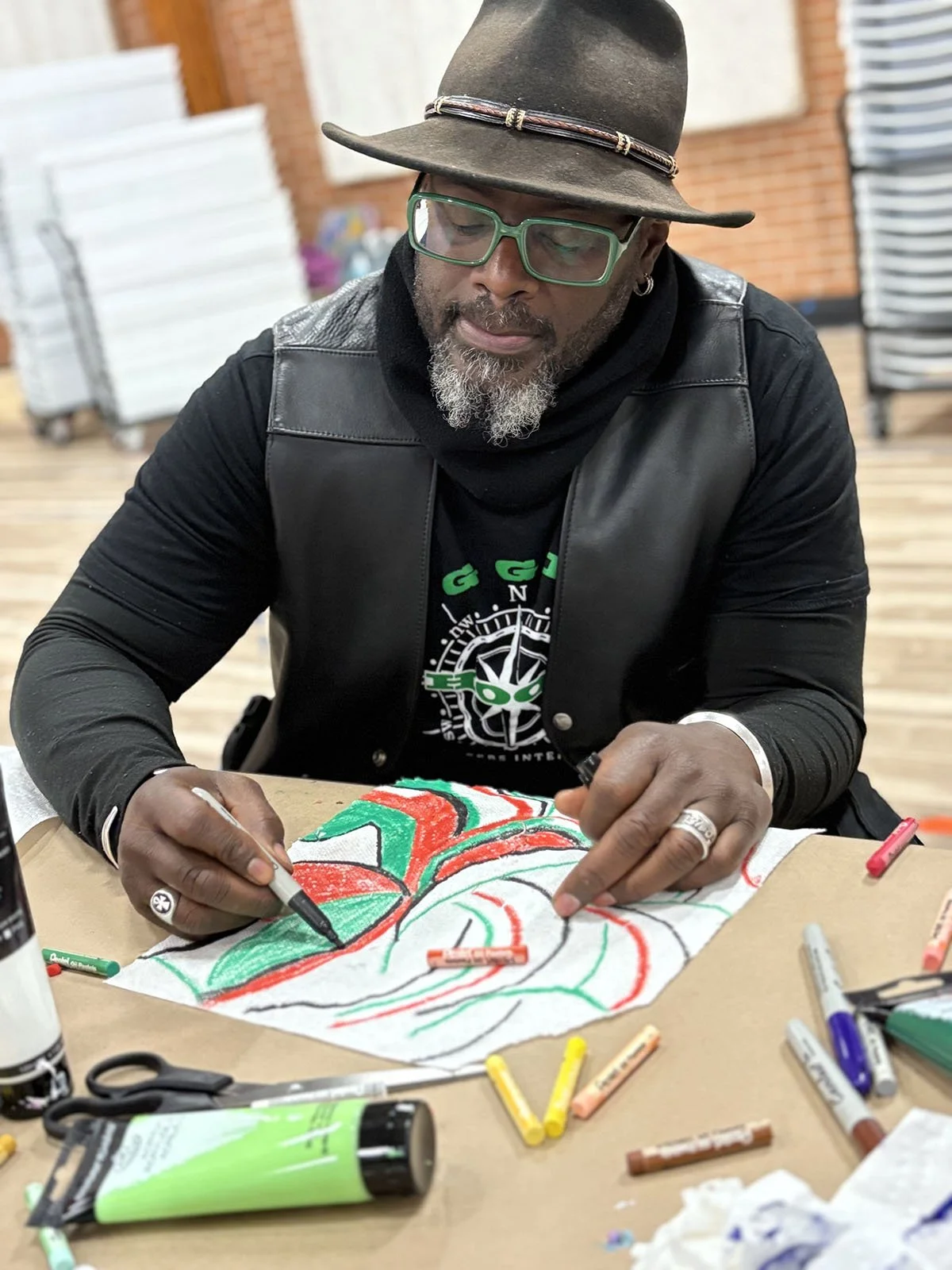
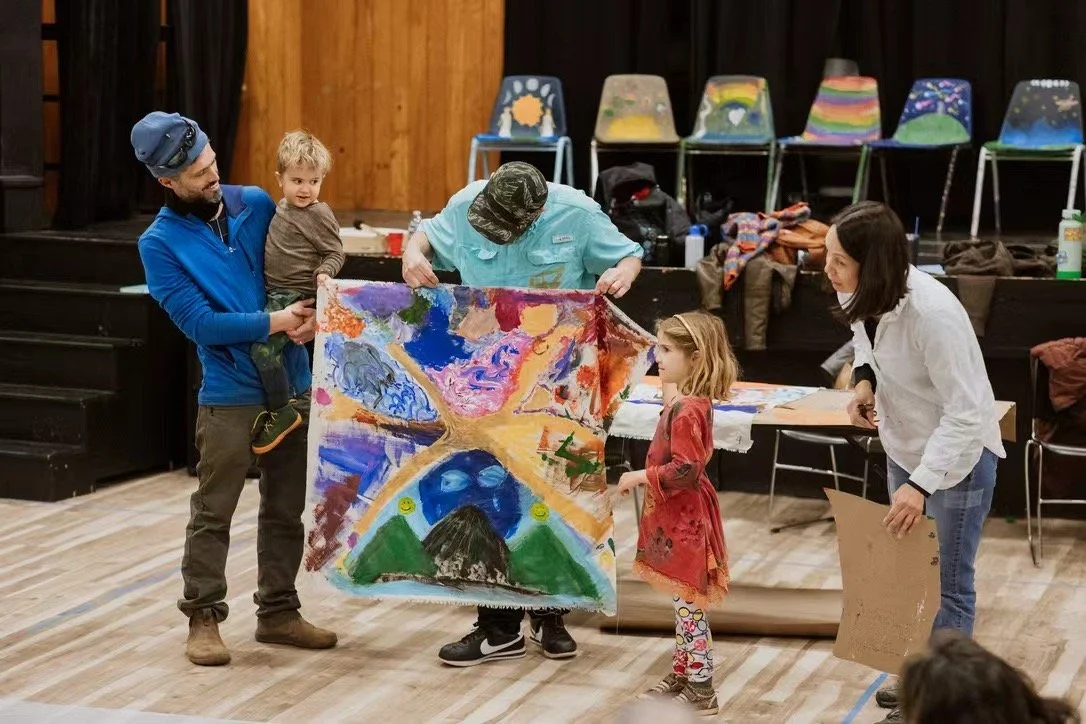
In January, Lily was invited by a group of community members in Western North Carolina, therapists, artists, makers, business owners, medical professionals and residents, to lead a series of workshops “to start creating beauty from our debris and losses” in the wake of Hurricane Helen. Verena Wieloch, the lead organizer, reports “that [Lily’s visit] truly energized people to connect with other projects and commit to their own arts practice” with an artist collective in Swannanoa stepping up to take the lead on a community-based project in their neighborhood. Verena continues, “I think it’s positive that’s so much of that community arts spirit was already here, as if Lily was the leading edge of a spirit that took root far beyond her reach,” adding, “Lily’s visit and life’s work has quietly shifted all of us.”
Nyiraneza Alexie: The Story of a 1994 Genocide Survivor
We are honored to announce the completion of Nyiraneza Alexie: My Story, the book Alexie created nearly twenty years ago in Lily Yeh’s story-telling workshop in Rugerero.
Looking back on those early days, she said, “Mama Lily found us in deep loneliness, still wounded by the genocide. Through drawing and conversation, she helped us rediscover our roots and imagine where we wanted to go. This completely transformed our mindset and opened a new vision of life for us.”
Seeing her story again after two decades moved Alexie deeply: “Lily, thanks to you and your team, our lives changed. We think of you with the love of a daughter for her mother.”
Today, Alexie’s life reflects the strength she discovered then—raising her children, running a mobile-money business, serving as a dedicated community health worker, and building a stable future with one son about to enter university and another thriving in high school.
You can view and read a digital flipbook of the publication below.
Alexie today.
Alexie with drawings she made in Lily’s workshop 20 years ago.